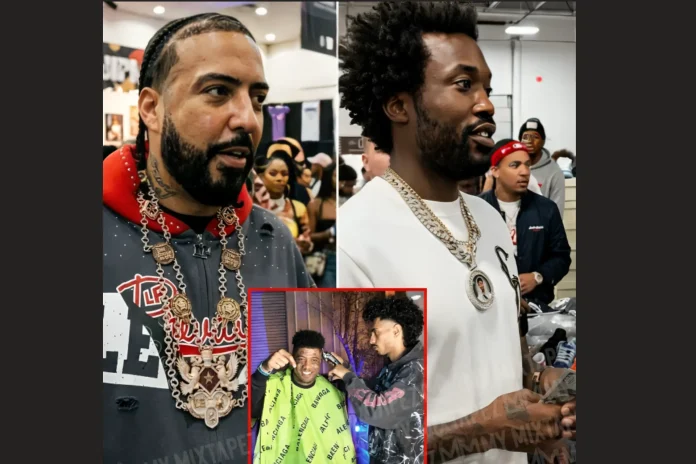
Is the notoriety of a celebrity considered payment for the use of clothing or shoes designed by a fashion designer or for the services they provide? That is the hot topic that blew up on Tuesday as a video went viral at ComplexCon 2026 of French Montana not wanting to purchase designs from an independent fashion designer but considering himself more valuable.
ComplexCon returned to the Los Angeles Convention Center on October 3–4. French Montana appeared on the “Album of the Year: LIVE” panel with DJ Akademiks and Adam22 and walked the marketplace. In circulating footage, while looking at racks of custom clothes (a sewing machine visible in some cuts), he and his group made it clear they weren’t buying. One version has him saying,
“We not paying for nothing here… I charge $250,000 to wear something.”
Other reports and clips quote him at around $150,000 “to tag somebody,” arguing that high-profile artists wearing or promoting a brand drives sales and visibility.
The clip went viral in the rap world’s social media on October 8th or 9th, around accounts like @iRAPOLOGY and others, eventually getting to WorldStar and hip-hop pages. The first responses accused him of being arrogant, especially to smaller designers that have to pay for the booth space and materials. Some even joked that the cultural relevance that French has now is not worth six-figure “wear fees.” Others noted that it has always been part of the hip-hop and fashion ecosystem that celebrities demand free products for their promotion, and no one has ever publicly accused him of it. Besides, no one in the press has reported French Montana officially denying the allegations, and the designer himself has not commented on the issue.
Meanwhile, the Blueface Kick stream from around October 4th had a different nature. Around the same time, a young barber (allegedly from Tacoma) agreed to pay approximately $2,000 for the privilege of viewing a Blueface Kick hair-cutting session on a live stream as a promotional stunt. After an average edge-up, the barber was confronted by his manager, Wack 100, who demanded the money in the chat. The barber apologized and blamed the application’s technical problems. Note that it was the service provider that paid for the product, not the other way around. The stream was widely popular with accounts like @rawclipshq engaging the audience.
Negotiated celebrity endorsements and product giveaways are common. Unpaid products or services requests are not. Celebrity endorsements will increase visibility, but not every time visibility leads to sales and covers all expenses for material and booth rental for a small business owner. Both parties have their valid points: visibility has its worth in the market, and good work should be rewarded accordingly.
These particular events are recorded, and to generalize from that and make a claim that “rappers don’t pay” is an exaggeration. The debate is real and happening right now, and what is left unknown is the true prevalence of the phenomenon.