

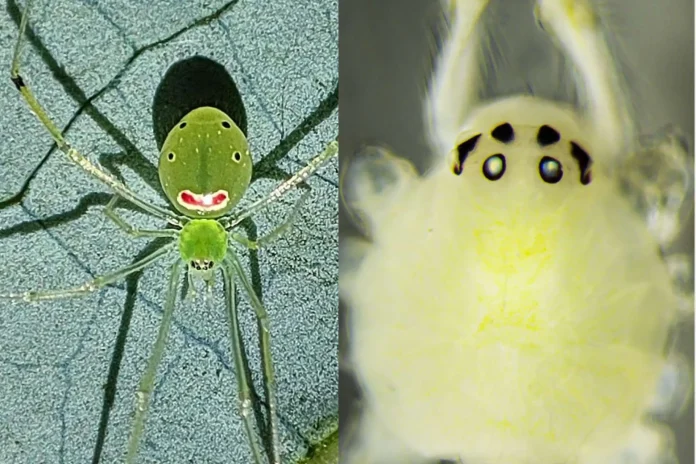
A new spider species with a striking “smiling face” pattern on its abdomen has been discovered in the high-altitude forests of the Indian Himalayas, marking the first time such a charismatic arachnid has been found outside Hawaii.
The species, formally named Theridion himalayana, was described in a paper published this month in the journal Evolutionary Systematics. Scientists say the tiny spider displays remarkable color variations, including bright red and black markings that closely resemble a grinning smiley face.
The discovery was made somewhat accidentally by researchers Devi Priyadarshini of the Regional Museum of Natural History in Bhubaneswar and Ashirwad Tripathy of the Forest Research Institute in Dehradun. While conducting an ant survey in 2023-2024 in the montane forests of Chamoli and Rudraprayag districts in Uttarakhand — near the Kedarnath Wildlife Sanctuary — the team collected more than 60 specimens at elevations above 2,000 meters.
Priyadarshini, who had previously studied the famous Hawaiian happy-face spider during her master’s research, immediately recognized the visual similarities. Genetic testing later confirmed the Himalayan spider belongs to the same genus, Theridion, but is a distinct species that evolved independently.
DNA analysis revealed an average 8.5% genetic difference from Hawaii’s Theridion grallator, with some comparisons showing up to 12% divergence. The findings provide a clear example of parallel evolution, as the distinctive “happy face” pattern developed separately in two distant mountain ecosystems.
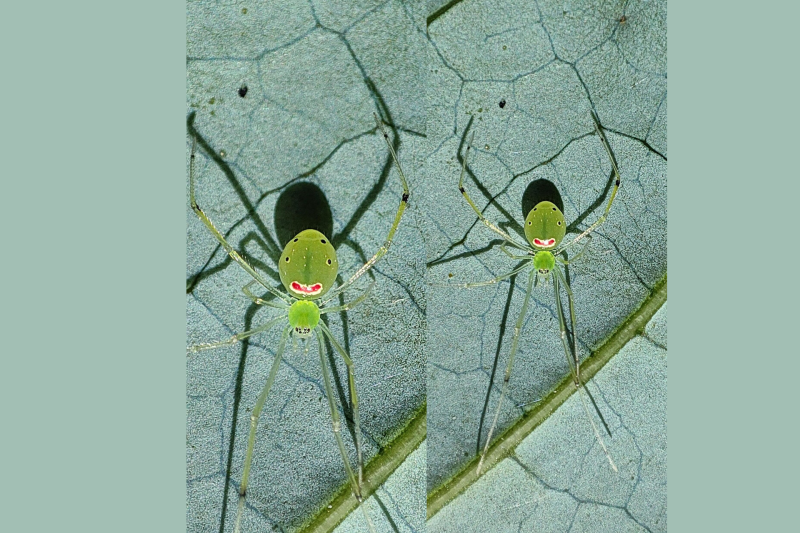
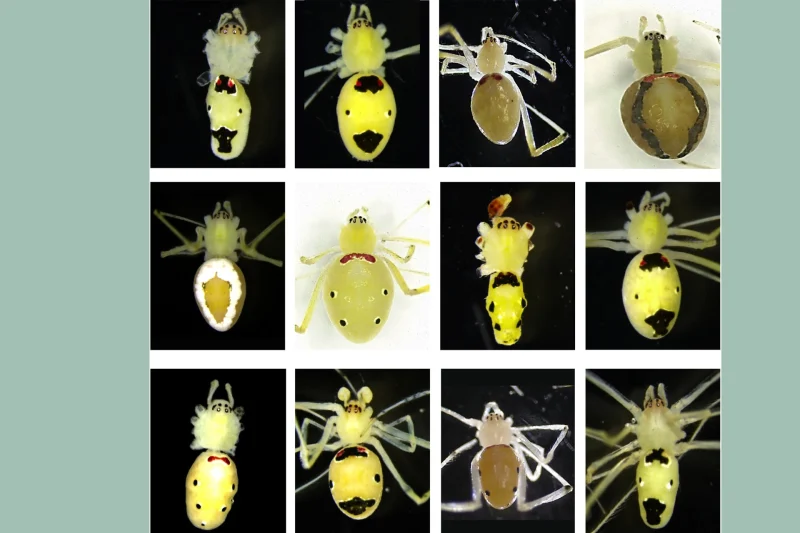
The Himalayan Happy-Face Spider is highly polymorphic, with researchers documenting over 32 different color forms in both males and females. Many variants feature the signature smiling pattern on a translucent green or yellowish abdomen. Measuring just 3-5 mm in length, the delicate spiders build irregular tangle webs and are typically found hanging upside down on the undersides of leaves in shaded, humid forest areas.
“This discovery highlights how much biodiversity is still waiting to be uncovered in the Himalayas,” the researchers noted. “What started as a routine ant survey turned into something truly special.”
The species is currently known only from its type localities in Uttarakhand and is not considered invasive. Its finding adds to the growing recognition of the Western Himalayas as a significant hotspot for unique wildlife and underscores the value of exploratory field research.
The cheerful little spider is already drawing attention from the global arachnology community for its remarkable resemblance to its Hawaiian cousin and the evolutionary questions it raises.

