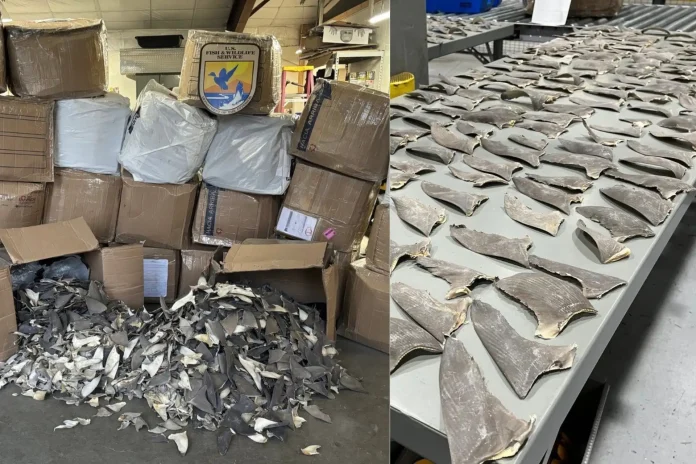
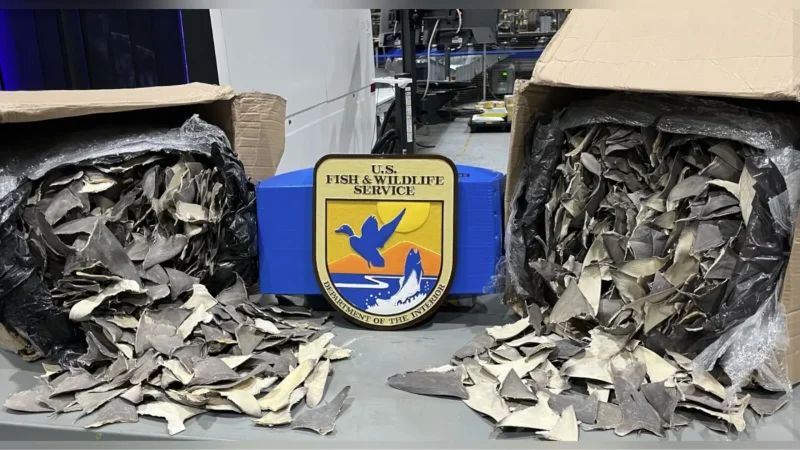
In a significant victory for marine conservation, U.S. wildlife officials intercepted approximately 50,000 dried shark fins hidden across roughly 20 shipments at multiple American ports last October.
The contraband, totaling more than 1,600 pounds (about 725-730 kg) and carrying an estimated black-market value exceeding $1 million, was destined for Hong Kong but never made it past U.S. borders. The seizures were announced by the U.S. Fish and Wildlife Service (USFWS) in mid-April 2026.
The shipments originated in Mexico and were routed through several U.S. transit points, including Anchorage, Alaska — where the first suspicious cargo was flagged during a routine inspection — as well as Louisville, Kentucky, and Cincinnati, Ohio. In an attempt to evade detection, smugglers packed the fins into cardboard boxes falsely labeled as automotive parts or car components, using crude and loose packing methods that ultimately drew attention from inspectors.
The initial discovery in Anchorage sparked a wider investigation, revealing the 20 linked shipments as part of a larger wildlife trafficking network moving goods from Latin America to Asian markets. The operation fell under Operation Thunder, a coordinated international effort targeting illegal wildlife trade.
Most of the fins belonged to silky sharks (Carcharhinus falciformis) and bigeye thresher sharks (Alopias superciliosus), both of which are protected under CITES (the Convention on International Trade in Endangered Species). These species, like many sharks, face intense pressure from overfishing, targeted finning — the practice of slicing off fins and discarding the bodies at sea — and bycatch in commercial fisheries.
The U.S. was able to seize the cargo despite its final destination being Hong Kong thanks to the Shark Fin Sales Elimination Act, which prohibits the possession, transport, and sale of shark fins within the United States. Because the shipments were transiting through U.S. ports, they fell squarely under American jurisdiction.
Hong Kong has long served as one of the world’s primary hubs for the shark fin trade. Dried fins remain a prized ingredient in traditional shark fin soup, a luxury dish commonly served at banquets, weddings, and special celebrations in China and other parts of Asia. Persistent demand continues to drive both legal and illegal harvesting.
Sharks play a vital role as apex predators in marine ecosystems. Their removal can trigger ripple effects throughout ocean food webs, impacting the health of entire marine environments. Conservation groups have repeatedly warned that unsustainable practices have pushed roughly one-third of shark species toward greater extinction risk.
The bust stands out as one of the larger shark fin seizures in the U.S. in recent years and demonstrates the value of vigilant port inspections combined with swift follow-up investigations.
Authorities are encouraging the public to report suspected wildlife crimes through USFWS tip lines or online portals.
While the fight against wildlife trafficking is far from over, operations like this serve as a powerful reminder of what effective international cooperation can achieve in protecting vulnerable marine species.