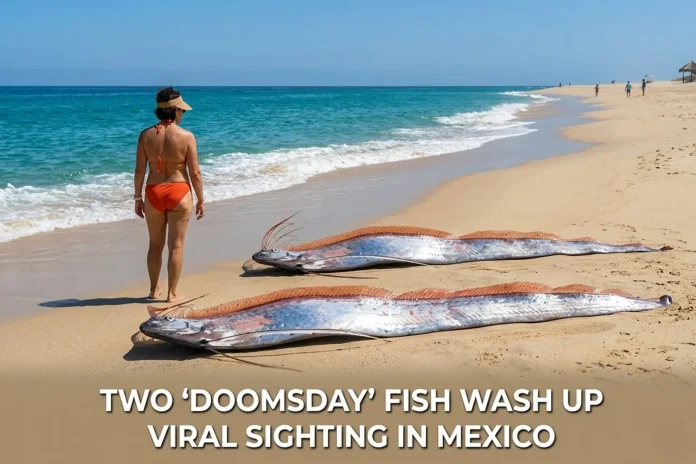
Two ultra-rare deep-sea oarfish, widely known as “doomsday fish,” washed ashore alive near Cabo San Lucas in Mexico on March 4, 2026, igniting viral videos and fresh online speculation about disasters amid ongoing global tensions. The roughly one-minute-fifty-three-second clip (approximately 113 seconds), reposted by Jon Marshall on X from sources including We Love Animals, captures the surreal beach encounter where beachgoers—including sisters Monica Pittenger and Katie Pittenger—discovered the massive serpentine creatures thrashing in shallow surf and on wet sand before a cooperative group effort guided them back to deeper water where both swam away safely. Such double sightings remain virtually unheard of since these fish inhabit depths around 3,000 feet, making any surface appearance highly exceptional and instantly amplifying the ominous folklore tied to the species.
The nickname “doomsday” fish originates from longstanding Japanese folklore where the oarfish, termed ryūgū no tsukai or “messenger from the sea god’s palace,” is believed to surface only as a divine warning of major calamities like earthquakes or tsunamis. This belief gained modern traction after several oarfish strandings preceded the catastrophic 2011 Tōhoku earthquake and tsunami in Japan, which claimed over 20,000 lives and caused the Fukushima nuclear meltdown. Although some have speculated that these sensitive deep-water creatures might detect subtle seismic shifts, rigorous scientific analyses of historical data spanning decades show no credible statistical link between oarfish appearances and subsequent earthquakes or other disasters, with most strandings explained by factors like illness, injury, disorientation, or unusual currents.
The handheld smartphone footage, shaky at times with panning and zooming between the two fish, reveals their elongated ribbon-like silver-blue bodies gleaming under bright tropical sunlight, accented by distinctive red-orange crests or manes near the heads and extremely long thin dorsal fins that lend an almost mythical eel-like appearance far larger than typical near-shore marine life, with estimates ranging ten to thirty feet or more. Tourists in swimsuits and casual beach attire crowd around in knee-deep or ankle-deep water, their reactions shifting from wide-eyed astonishment and hesitant pointing to determined urgency as men and women wade in to nudge the struggling fish seaward in a somewhat chaotic yet compassionate group push, set against turquoise ocean waves gently lapping white sand under clear skies that starkly contrast the bizarre deep-sea intruders. The overall mood blends amazement with concern for the animals’ welfare, as voices express disbelief yet prioritize helping rather than merely recording, contributing to the clip’s rapid viral spread.
In the context of March 2026’s turbulent world situation—including intensified military escalations in the Middle East with U.S. and allied airstrikes on Iranian targets met by retaliatory actions raising alarms over potential wider conflict and NATO entanglement—this rare natural event inevitably stirs heightened public anxiety. Online conversations swiftly connected the double sighting to ancient omens amid uncertainties surrounding war trajectories, energy supply risks from threatened oil infrastructure, and broader geopolitical strains, even as marine experts firmly reject any predictive connection. The phenomenon underscores how superstitions endure during periods of instability, merging genuine wonder at oceanic mysteries with humanity’s impulse to interpret unusual occurrences as signs.
This moment ultimately showcases the vulnerability of elusive deep-sea species seldom encountered by people alongside the instinctive kindness displayed by vacationers who acted decisively to aid the fish instead of standing by. Monica Pittenger described spotting the bright flashing shapes from afar as feeling like an otherworldly scene, yet the collective rescue ensured the oarfish returned unharmed to their natural habitat. While online panic revives old myths and mirrors current global unease, the encounter reinforces the importance of scientific understanding over folklore and highlights positive human responses to nature’s surprises in unpredictable times.