

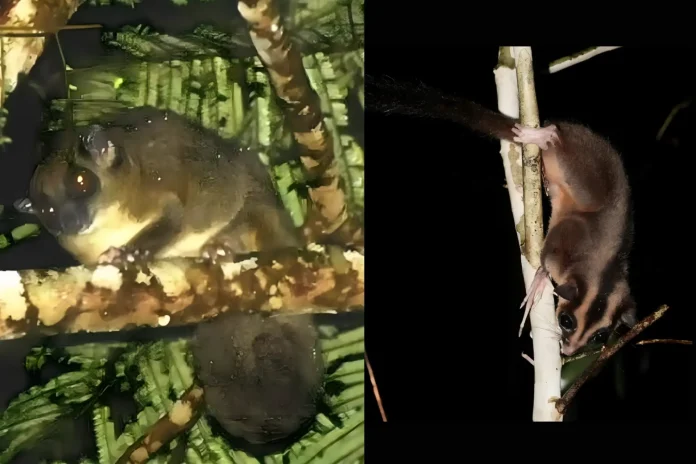
Hold onto your hats, everyone science just hit us with a wild plot twist that’s got the whole world talking. Picture this: two little marsupials, written off as goners for around 6,000 years, suddenly show up alive and well in some remote hideaway. These guys were basically museum fossils until now, darting around in the wild like nothing happened. It’s not just cool news; it’s like a straight-up resurrection that’s got experts pumped and conservation folks racing to catch up.
On March 6, 2026, researchers dropped the bombshell that the pygmy long-fingered possum and the ring-tailed glider long assumed extinct since the tail end of the last Ice Age are still hanging in there. Up until this point, we only knew them from old bones unearthed in Australia and New Guinea. The big reveal landed in the Records of the Australian Museum, and folks are calling it a total game-changer.
What’s the big deal? Stumbling upon one “lost” critter is rare, but two at the same time? Australian mammalogist Professor Tim Flannery, who headed up the team, described it as “unprecedented” and figured it might even beat finding a living Tasmanian tiger. Paleontologist Scott Hocknull backed that up, saying it’s “more significant than discovering a living thylacine.”
A tweet from X.
The magic happened in the thick, misty rainforests of the Vogelkop Peninsula better known as the Bird’s Head in West Papua, Indonesia. This place is a total hotspot for weird and wonderful wildlife: super remote, rugged mountains, ancient trees, and hardly anyone poking around. It’s perfect for these night-owl animals to stay off the radar for thousands of years.
Shoutout to the local Indigenous folks from the Tambrauw and Maybrat clans they were crucial. They shared their old-school knowledge, led the team through the terrain, and even see the glider as sacred, which has kept hunters away. Without their help, Flannery’s group might still be wandering in circles.
Let’s meet the stars. First, the pygmy long-fingered possum (Dactylonax kambuayai) this fluffy little thing is about palm-sized, tips the scales at around 200 grams, rocks some striking black-and-white stripes, and has this extra-long finger on each paw for prying bugs out of tree bark like built-in tools. It’s a nighttime tree-climber and honestly pretty darn cute.
Next up, the ring-tailed glider (Tous ayamaruensis) a pint-sized glider with a handy tail for gripping and a skin flap for gliding from branch to branch. It’s the nearest relative to Australia’s greater glider, nests in tree holes, sticks with a mate for life, and chows down on sap and leaves. Fun fact: this is the first new marsupial genus described from New Guinea since way back in 1937.
They nailed the ID with a combo of classic sleuthing and high-tech tricks comparing fossils, rechecking a 1992 museum specimen that got mislabeled, snapping field pics from everyday folks like Carlos B., and boots-on-the-ground expeditions. Big thanks to collaborators like Professor Kristofer Helgen from the Bishop Museum and Dr. Aksamina Yohanita from the University of Papua.
These furballs get the “Lazarus species” label, after that Bible story of the guy who came back from the dead fitting, since they disappeared from the records forever ago and then bam, they’re back. Tough-to-reach spots and patchy fossil evidence let them slip under the radar. It’s a solid nudge that extinction isn’t always the end, especially in under-explored gems like New Guinea.
Word spread like wildfire online. A post on Dexerto pulled in over 300,000 views, with people losing it over the adorable pics and dubbing them “nature’s comeback kings.” Comments poured in, folks geeking out over these secret survivors and wondering what else is out there waiting to be found.
But hey, it’s not all high-fives and confetti. Stuff like logging, palm oil plantations, and shrinking habitats are closing in on these forests. We don’t even have solid population numbers yet, and neither species has an official IUCN rating. The team’s keeping the exact spots hush-hush to dodge any shady collectors.
In a world where we’re losing animals left and right, this find shines a light on teaming up with Indigenous communities and scientists as the way forward for protecting what’s left. Flannery nailed it when he called it “remarkable” and highlighted New Guinea as a safe haven for these ancient bloodlines. Fingers crossed this lights a fire under us to step up before these little wonders blink out for good.

