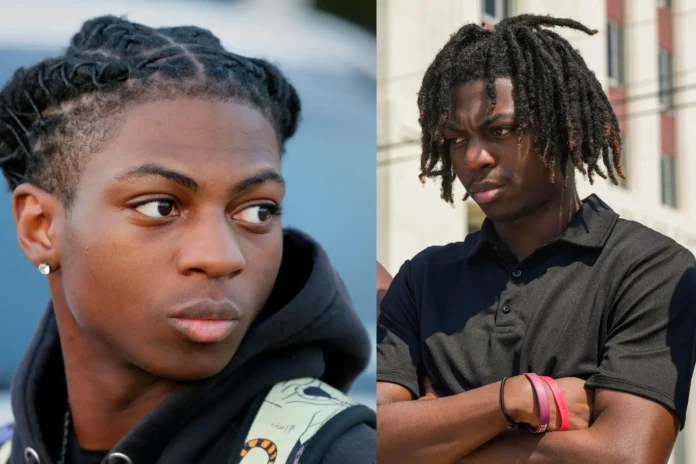
Darryl George, the Texas teen who became the face of a national conversation on hair discrimination in schools, has officially lost his two-year legal fight against Barbers Hill Independent School District.
On July 24, 2025, a federal judge dismissed George’s lawsuit with prejudice, closing the case for good and preventing him from bringing the same claims again. The decision marks the end of a high-profile legal battle that tested the strength of Texas’s CROWN Act, which was supposed to protect students from discrimination based on natural hairstyles like locs and braids.
But for George, the fight was never just about hair.
George’s ordeal began in August 2023, when he was suspended for wearing his locs pulled up in a bun. School officials argued that if he let his hair down, it would violate Barbers Hill’s rule that boys can’t have hair past their collar, eyebrows, or earlobes.
The timing was especially striking: just one day later, Texas’s CROWN Act was enacted, prohibiting schools from discriminating against students for wearing natural or protective styles. But Barbers Hill stood firm, insisting the law didn’t cover length.
That stance forced George into nearly a full academic year of in-school suspension or disciplinary placement. His mother, Darresha George, says the conditions were crushing.
“He had to sit on a stool in a cubicle for eight hours a day,” she told reporters. “Every day he came home complaining his back hurt. It was painful to watch.”
George himself described the isolation as overwhelming.
“You see everyone else walking and laughing, and you’re stuck in one room for months. It makes you feel lonely,” he said.

George eventually transferred to another Houston-area school to finish his senior year, but his lawyers argue that the damage was both academically and emotionally lasting.
In court filings, they wrote:
“As a direct result of the district removing Mr. George from regular curricular instruction during his entire junior year of high school, he has suffered concrete educational disadvantages and disabilities that will persist.”
Civil rights groups, including the ACLU of Texas, rallied around George, saying his case highlighted the gaps in protections offered by the CROWN Act.
The federal case is over, but George’s fight isn’t completely finished. In February 2024, a state judge ruled that Barbers Hill’s hair policy did not violate the CROWN Act. His legal team quickly appealed, and the case is still winding through Texas courts.
The controversy has already pushed lawmakers to take action. Rep. Ron Reynolds, who co-authored the original CROWN Act, announced plans to amend the law to include hair length so that no district can sidestep it.
Meanwhile, Barbers Hill officials maintain they’ve done nothing wrong. Superintendent Greg Poole has defended the dress code for years, arguing it instills discipline, prevents disruption, and teaches students respect for authority. He has even compared the CROWN Act to affirmative action, saying conformity is “a positive benefit of unity.”
After the federal case was dismissed, Poole told the Houston Chronicle the decision “vindicates our district.”

The dismissal may have closed one chapter for George, but his case continues to shape the broader fight over students’ rights to wear their natural hair without punishment.
Advocates say if courts dismiss cases like George’s once a student graduates, harmful policies could continue unchecked. “If every case is tossed out at graduation, schools can keep enforcing discriminatory rules without ever being challenged,” one filing warned.
As for George’s senior year ended in a different district, away from the school that punished him for his locs. But the impact of his story — and the changes it may bring to Texas law — is far from over.