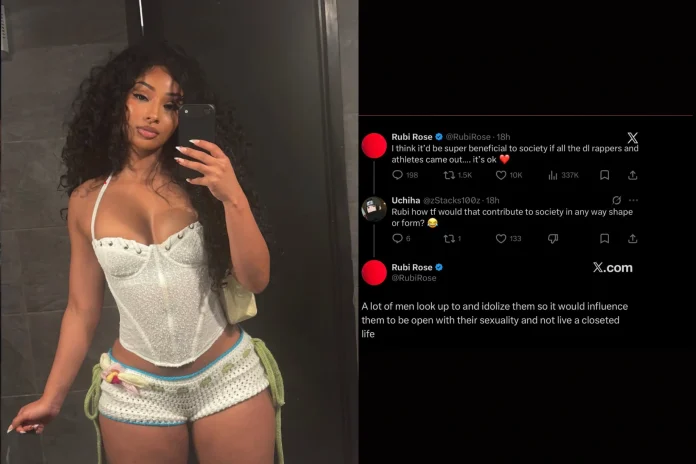
Rubi Rose has ignited widespread discussion across social media after suggesting that men living on the “down low” in hip-hop and professional sports should publicly come out.
In a post on X (formerly Twitter) that quickly went viral in early May, the rapper and model wrote: “I think it’d be super beneficial to the society if all DL rappers and athletes came out…. it’s ok ❤️.” She followed up by explaining that many young men look up to rappers and athletes as role models, and their openness could encourage fans to live more authentically rather than in secret.
The “down low,” or DL, refers to men — frequently in hyper-masculine urban and Black cultural contexts — who have sex with other men but maintain a public heterosexual identity, often while in relationships with women. The topic remains sensitive in hip-hop, a genre where traditional notions of masculinity have long dominated.
Rose’s comments drew a polarized response. Supporters praised her for advocating against stigma and promoting honesty, while critics told her to mind her own business, accused her of clout-chasing, and defended personal privacy. Some online reactions included jokes and speculation about specific unnamed artists.
Public health experts have previously highlighted concerns around the DL phenomenon. CDC data and studies over the years have linked nondisclosing men who have sex with men (MSM) to elevated HIV transmission risks, particularly within some Black communities, where male-to-male contact remains a leading factor in new diagnoses. Nondisclosure can complicate prevention efforts and partner communication, though advancements in PrEP, testing, and treatment have improved outcomes in recent years.
Hip-hop has seen growing visibility for LGBTQ+ artists in recent years. Figures like Lil Nas X, Frank Ocean, Tyler, the Creator, Young M.A., and Saucy Santana have achieved mainstream success while expressing their sexuality or fluidity more openly. In sports, athletes such as former NFL player Carl Nassib and NBA veteran Jason Collins came out during their careers, helping normalize conversations in their respective fields.
Still, top-tier mainstream rappers and star athletes in the most macho environments remain overwhelmingly private on the subject, with few major disclosures at the highest levels of commercial success.
Rose’s statement arrives amid ongoing cultural conversations about authenticity, celebrity influence, and the intersection of personal identity with public image in music and sports. As of now, no major artists have directly responded to her comments.