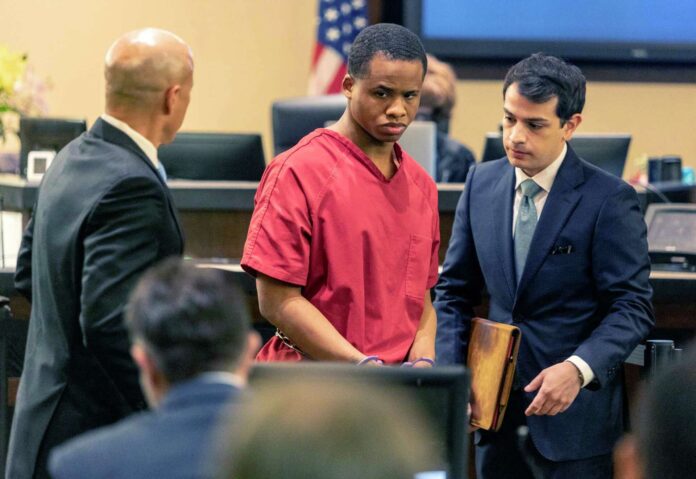
The long-awaited trial of rapper Taymor McIntyre, known as Tay-K, began in Texas. The artist, who gained notoriety for his viral hit “The Race,” is now standing trial for the 2017 murder of 20-year-old photographer Mark Anthony Saldivar. The case, which has been mired in delays and legal battles, is finally being heard in court, with the prosecution and defense presenting starkly different versions of what happened that fateful day.
The trial ended with jury selection on March 31, 2025, and testimony started on April 1. The case is still unfolding, and everyone’s waiting to see what happens next.
Tay-K, now 24, is already serving a 55-year sentence for a 2016 murder in Tarrant County. But this new case takes us back to a dark day in April 2017, when Tay-K was just 16 years old. Police say he was part of a group that got into an argument with Saldivar while they were all in a car.
Things turned ugly fast—Saldivar’s camera equipment was stolen, and he was shot dead in the parking lot. A lawsuit filed by Saldivar’s mom claims Tay-K was the one who pulled the trigger. If the jury finds him guilty of this capital murder charge, he could be looking at life in prison without parole. Since he was under 18 at the time of the crime, the death penalty isn’t on the table.
Prosecutors painted a grim picture during opening statements, claiming that Saldivar had been lured into a trap. He reportedly got into a black Kia with McIntyre and others, unaware of the danger ahead. The state alleges that inside the vehicle, McIntyre brandished a gun, assaulted Saldivar, and demanded his belongings. The situation escalated when Saldivar tried to flee, jumping onto the car’s hood. Moments later, he was fatally shot.
What makes this case even more gripping is Tay-K’s rise to fame. In 2017, while on the run after cutting off his ankle monitor, Tay-K dropped his hit song “The Race.” With its raw energy and bold lyrics, that track blew up, hitting No. 70 on the Billboard Hot 100 and racking up over 250 million views on its music video.
In the video, Tay-K even poses next to his wanted poster—a move prosecutors might use to show he was trying to dodge the law. Fans loved the song for its gritty storytelling, but now it’s part of the legal drama, possibly as evidence against him.
The trial itself has had its share of hiccups. It was supposed to happen years ago, but delays kept piling up—first because of COVID-19 and then because of scheduling conflicts with the Final Four events at the Alamodome. Can you believe that?
A murder trial getting pushed back because of a basketball tournament! But finally, on March 31, the jury was picked, and the courtroom drama began. Experienced prosecutors lead the case, while Tay-K’s defense team, Gerald Goldstein and John Hunter, are fighting hard for him.
The defense argues that the evidence does not support the prosecution’s version of events. They claim that Saldivar became aggressive and started damaging the car, forcing McIntyre to act in self-defense. According to McIntyre’s lawyers, the people in the car with him had incentive to shift blame onto the rapper, as they received plea deals for their testimony.
One key witness, who was at the scene but not involved in the altercation, described seeing a group of people fighting in the car before a gunshot rang out. However, the defense is challenging the reliability of this testimony, arguing that the witness could not have seen who fired the shot.
Physical evidence, too, has come under scrutiny. There was one shell casing inside the car, and this was traced from a weapon picked up by the authorities. The prosecution presents this as evidence that McIntyre made the fatal shot. The defence is questioning the handling of this evidence, highlighting that forensic testing was done years after the incident.
However, the rapper’s troubles in the courtroom overshadow his music. A conviction would result in his possible life sentence, effectively ending his days as a limelight figure. The trial’s outcome would not only determine his fate but also call into question the broader themes of the justice system, the law of self-defense, and the influence of fame in high-profile trials.

The trial will last several weeks, with both sides calling multiple witnesses to the stand. As new evidence is presented, the jury will have to decide whether Tay-K is guilty of capital murder or if the prosecution’s case is built on shaky ground.
At this stage, the courtroom becomes the center of attention, and everyone is focused on Tay-K as he fights for his freedom again.