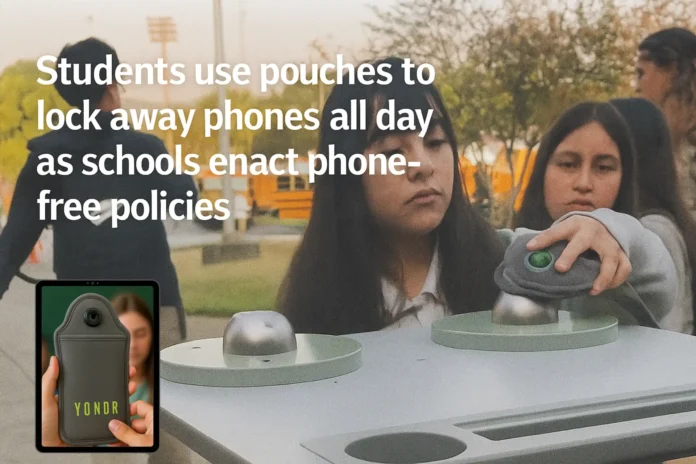
Cell phones are becoming a thing of the past in classrooms as schools nationwide adopt a bold new strategy: locking students’ phones in pouches for the entire school day. From Texas to New York, districts are rolling out policies requiring students to secure their devices in Yondr pouches, only unlocking them at dismissal. This growing trend aims to curb distractions, boost grades, and tackle mental health concerns, but it’s sparking debates among parents, students, and educators.
Here’s what’s happening and why it matters. A Nationwide Push for Phone-Free Schools Across the U.S., schools are embracing phone pouches to create distraction-free learning environments. In Thorndale, Texas, middle and high school students lock their phones, smartwatches, and earbuds in Yondr pouches each morning. The pouches stay with them, but they can’t access their devices until unlocking stations open at the end of the day. The district, serving about 600 students, made this move after seeing success in another school, reporting better engagement and fewer cyberbullying incidents. Non-compliance comes with a $15 fine per offense, though some parents worry about limited access during emergencies.
Cincinnati Public Schools in Ohio took it district-wide for high schools in the 2024-2025 school year, spending $500,000 on pouches after a successful pilot at Hughes STEM High School showed improved grades. Students lock their phones at the start of the day and can contact parents through the school office if needed. Similarly, Abilene Independent School District in Texas invested $125,000 to equip high schoolers with pouches, citing phones as a major barrier to focus. These schools join others like Newburgh Free Academy in New York, where 3,100 students now lock phones from arrival to dismissal, and Bullard High School in Fresno, California, where pouches were implemented in 2022, but official data actually indicates a decline in English Language Arts performance, not a proficiency jump.
Why Schools Are Taking Action The push for phone pouches stems from mounting evidence that smartphones disrupt learning. A 2023 survey found 72% of high school teachers see phones as a major classroom distraction, with students spending a median of 43 minutes per day on their devices during school hours. Notifications from apps like Snapchat or TikTok pull focus, and it can take young brains 20 minutes to refocus after a single interruption. Schools also point to academic gains: a study in Lackawanna, New York, showed a 6.27% increase in academic success rates after pouches were introduced. Beyond academics, mental health is a key driver.
The U.S. Surgeon General has flagged social media’s impact on youth anxiety and depression, and schools report that constant phone use fuels “nomophobia” – the fear of being without a device. Cyberbullying is another concern, with over 8.5 million cases reported on school platforms since 2019. While Newburgh Free Academy noted more face-to-face student interactions during lunch after pouch implementation, at James Lick Middle School in San Francisco, cyberbullying remains a concern.
State policies are also fueling the trend. At least 22 states, including California, New York, and Ohio, have laws restricting phone use in K-12 schools. California’s 2026 deadline for districts to limit phone use has spurred action, while New York allocated $13.5 million for storage solutions like pouches. Governors across the political spectrum, from New York’s Kathy Hochul to California’s Gavin Newsom, back these efforts, citing phones’ addictive algorithms as a threat to student well-being.
How It Works and What’s at Stake The Yondr system is straightforward: students place their phones in a pouch that locks magnetically upon entering school. They keep the pouch but can’t access the device until unlocking it at designated stations at the end of the day. Schools like Linden Public Schools in New Jersey, which spent $15,000 on pouches for its middle school, report smooth implementation, though some students initially struggled with “withdrawal” from their devices. Enforcement varies – some schools confiscate non-compliant phones, while others issue fines or suspensions. The benefits are clear but come with challenges. Parents worry about reaching kids during emergencies, like school shootings, though schools argue office phones suffice. Costs can also be a hurdle: pouches cost $25-$30 each, and replacements, like Abilene’s $32 fee, can strain families. Students have mixed feelings – some, like those at Linden High School, argue pouches create more distractions, while others report less stress without constant notifications. There’s also the issue of workarounds, with some students tampering with pouches or using old phones as decoys.
Should Every School Follow Suit? For schools considering pouches, the process starts with assessing needs through surveys and stakeholder input. Funding is critical – districts can tap state grants or federal funds, as Cincinnati did with Title IV money. Clear policies, like bell-to-bell bans with medical exemptions, help ensure consistency, while multiple unlocking stations prevent dismissal bottlenecks. Schools must also address parent concerns by offering alternative communication channels and monitor for issues like smartwatch use, which can mimic phone distractions. The evidence suggests pouches work better than less enforceable rules, like keeping phones in backpacks, where notifications still tempt students. With academic gains, fewer behavioral issues, and a national push for phone-free schools, this comprehensive school phone lock approach is gaining momentum. Yet, schools must balance these benefits with practical concerns to win over parents and students.