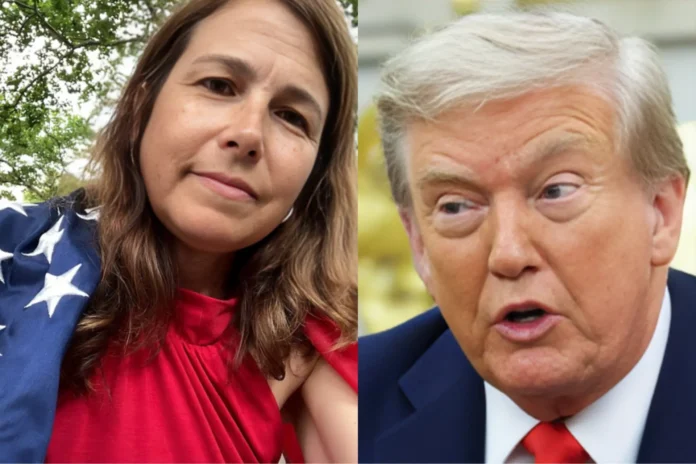
On a sweltering Washington, D.C. afternoon in August, demonstrators crowded the city streets around the White House. One such demonstrator was Lafayette, Indiana, 50-year-old Nathalie Rose Jones. She ended up in federal detention by night, charged with something much worse than political opposition. On 16 August 2025, Jones was detained and charged with two felonies after threatening, allegedly, to assassinate former American President Donald Trump.
The case underscores a growing reality: words typed on social media, once dismissed as “just talk,” can carry devastating legal consequences. Federal prosecutors say Jones’s online posts crossed the line into what U.S. law calls a “true threat.”
As charged by the Department of Justice, Jones has two felony counts: threatening the life of the President and sending interstate threats. Combined, the charges impose a sentence of ten years in prison. Jeanine Pirro, the U.S. Attorney, summed the case up straightforwardly:
“Threats against a president are not jokes, they are grave national security concerns.”
The Secret Service began monitoring Jones’s online activity between August 2 and 9. On August 6, she posted a graphic Facebook message addressed to the FBI:
“I am willing to sacrificially kill this POTUS by disemboweling him and cutting out his trachea with Liz Cheney and all The Affirmation present.”
She repeatedly called Trump a “terrorist” and “dictator,” blaming his handling of COVID-19 and vaccine policies for “unnecessary loss of life.” On August 14, she addressed Defense Secretary Pete Hegseth, urging him to stage an “arrest and removal ceremony” at the White House.
The investigation intensified on August 15, when Jones voluntarily sat down with agents in Washington. Officials say she reaffirmed her statements, telling them that if given the chance, she would assassinate Trump with a “bladed object.” The next day, as she joined a protest near the White House, agents questioned her again. This time, she admitted making the threats but denied any current plan to act. She was arrested shortly after.
Special Agent Matt McCool, who led the Washington field investigation, noted that
“any threat against a former or sitting president is taken with the utmost seriousness.”
Under federal law, prosecutors do not need to prove Jones intended to carry out the threat, only that her words constituted a “true threat.” That distinction between hyperbolic political speech and unlawful threats is often at the heart of First Amendment debates.
Jones’s arrest has brought back debate about where such a line exists. Civil rights groups caution that fervent political oratory may become a crime, while authorities claim such speech poses a threat to public safety.
Mental health concerns have also surfaced. While no evaluation has been disclosed, the disturbing imagery in Jones’s posts has raised questions about her state of mind.
A tweet from X.
Jones’s case highlights the double-edged nature of digital platforms. Social media has become a space for citizens to vent frustration, but when threats are involved, law enforcement is compelled to act. As Pirro put it,
“Our democracy protects free speech, but it does not protect threats of violence.”
For Jones, the political motive was clear. She told agents she wanted to “avenge lives lost during the COVID-19 pandemic,” holding Trump responsible for policies she believed caused harm.
Jones is waiting for her initial appearance in court in Washington, D.C. She can receive a maximum of ten years in prison, should she be found guilty. This case will not only challenge the boundaries of free speech during the information age, but the rising friction between political rage on the Internet and its criminal ramifications offline.