

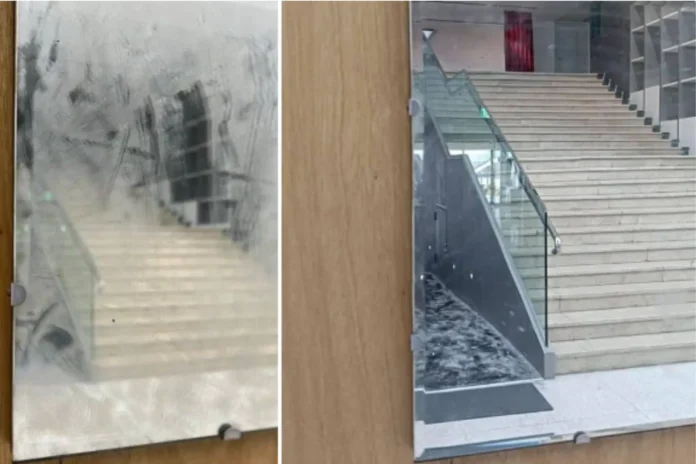
On November 3, 2025, a routine patrol at the Keelung Museum of Art in Taiwan took an unexpected turn. A volunteer spotted what looked like a grimy mirror on display and reached for toilet paper to wipe it clean. The surface, however, was no ordinary dust buildup. It formed the heart of “Inverted Syntax-16,” a conceptual artwork by Taiwanese artist Chen Sung-chih, valued at around $50,000. Over 40 years, the dust and smudges had accumulated deliberately, turning the mirror into a symbol of obscured identity.
A tweet from X.
Museum staff rushed in to stop the effort, but too much had been erased. The piece, part of the ongoing “We Are Me” exhibition, could not return to its original state. Cheng Ting-ching, deputy director of the Keelung City Culture and Tourism Bureau, later explained,
“The volunteer believed the mirror had gathered dirt and was unaware that the dust was deliberate.”
This simple misunderstanding exposed the thin line between care and catastrophe in art preservation.
Chen Sung-chih, born in 1978, draws from everyday materials to probe deeper human experiences. His installations often repurpose mirrors, fabrics, and aged panels to unpack memory, ritual, and societal shifts. “Inverted Syntax-16,” created in 2022, mounted a mirror on painted timber with mixed fabrics and a lamp. The dust layer, in particular, evoked the “distorted self-awareness of the middle class,” a critique of how societal norms cloud personal reflection much like a fogged glass that refuses clear sight.
As Chen’s practice shows through exhibitions at galleries like YIRI ARTS, his work challenges viewers to question the ordinary. The title hints at linguistic flips, mirroring how class perceptions invert reality. Reports from GB News note that Chen
“reimagines commonplace objects to investigate concepts of remembrance, ceremony and change.”
In this case, the dust was not neglect but a vital metaphor for disappearance and flux.
Such mishaps are not new to conceptual art, where intent often clashes with instinct. In 2012, a cleaner in Italy scrubbed away dust from Ilya Kabakov’s installation, mistaking debris for trash a parallel that underscores the ongoing struggle to safeguard ephemeral pieces. A study in the Journal of Aesthetics and Art Criticism examines these tensions, arguing that preserving such works demands rethinking maintenance as interpretation.
Closer to home, a 2004 incident at London’s Tate Britain saw a staffer discard a plastic bag central to Gustav Metzger’s exhibit. These cases, detailed on Wikipedia’s page on accidental art damage, reveal patterns volunteers and cleaners, driven by good intentions, upend artistic plans. For the Keelung Museum, opened in 2024 as the city’s largest arts space, the event prompts a review of training protocols.
News of the damage spread quickly, igniting online forums and art circles. The Keelung Culture and Tourism Bureau issued a swift apology, pledging talks with Chen and insurers. Legal expert Tsai Chia-hao weighed in, stating that
“wiping away dust from an artwork may not constitute tangible property damage,”
Which could snag compensation claims under standard policies.
On platforms like X, reactions ranged from empathy
“a well-meaning error in a high-stakes space,”
As one user put it to wry twists. Some called the volunteer an unwitting collaborator, arguing the fresh wipe now
“embodies the obliviousness the piece critiqued.”
This ties into sociological ideas, like Marx’s false consciousness, where everyday actions unwittingly reinforce illusions of class clarity, as explored in Baruch College analyses.
This quiet blunder at Keelung’s museum lays bare art’s vulnerability a single cloth can rewrite meaning, turning critique into coincidence. It calls for clearer signage and volunteer briefings, ensuring conceptual art damage stays rare. Yet in the irony, there’s resonance the volunteer’s polish now layers the work with real-world obliviousness, proving perception’s power to reshape intent. As museums worldwide grapple with public touchpoints, events like this remind us: understanding demands more than a glance.
