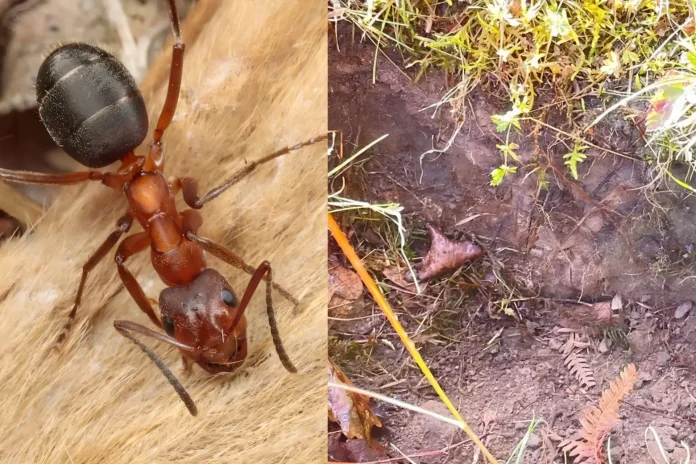
Conservation researchers doing routine checks at Chudleigh Knighton Heath Nature Reserve in south Devon in mid-October got a nasty surprise. An established nest of narrow-headed ants was gone. In its place: a hollow in the ground and clear marks from a spade.
The missing colony of Formica exsecta one of England’s rarest ants could have held between 1,000 and 5,000 insects, including one or more breeding queens that can live up to 25 years. The site is the species’ last known stronghold in England. Small populations still hang on in Scotland, including spots linked to the Balmoral Estate. A recent survey counted 142 active nests at the reserve, so every one counts.
Devon Wildlife Trust reported the theft to Devon and Cornwall Police (crime reference 50260284768). The reserve is a Site of Special Scientific Interest. Intentionally or recklessly damaging, destroying, or disturbing an SSSI is a criminal offense. Police have appealed for information.
The species recovery officer from the trust who works with ants, Julia Balfour, described this incident as being very significant.
“This is very serious because removing an established colony is a big loss for this species. Narrow Headed Ant colonies grow slowly and an established colony will have long lived queens which took many years to grow and are not easily replaceable. This act of vandalism is as bad as raiding wild birds eggs illegally. This is the pressure that our natural world is under.”
The statistic of 142 nests was pointed out and it was explained that even a single nest loss causes years of effort to be undone.
Laura Krusin of Buglife, which is partnering with the trust on habitat work, warned that removing nests can have a catastrophic impact on an already threatened population. The species is near-threatened on the IUCN Red List, nationally rare, and a Section 41 priority species. It once lived more widely across southern English heathlands but declined sharply over the past century from habitat loss tied to agriculture, development, and fragmentation.
Stephen Hussey of the trust said whoever took the nest almost certainly had prior knowledge the colonies are not obvious to casual visitors. Possible motives floated so far include private insect collecting (the hobby of keeping live ant colonies has grown) or a misguided attempt to “rewild” the ants by moving them to former habitat. Neither has been confirmed. Successful relocation needs real expertise and preparation; amateur efforts are unlikely to work and remain illegal.
The timing stings. A collaboration between Devon Wildlife Trust and Buglife, backed by UK government funding under the Wild Again initiative, had just started improving habitat and aiming to strengthen the population. The theft undercuts that progress.
No arrests have yet been made. If anyone has any information relating to this case, they should report it to Devon and Cornwall Police by calling 101 or using their online wildlife crime reporting tool, mentioning the crime number.
Cases of wildlife crime tend not to be publicized when the animals concerned are insects rather than birds or mammals. However, for an animal that is limited to one place in England, the loss of one of its colonies is no small matter.