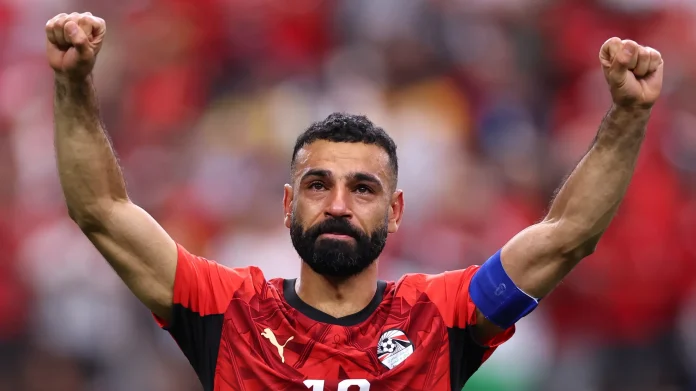
A dramatic late comeback by Argentina was marred by officiating controversy on Wednesday, as a non-penalty decision involving Mohamed Salah in the final moments helped the defending champions advance past Egypt with a 3-2 victory in the 2026 World Cup Round of 16.
Argentina rallied from a 0-2 deficit with goals from Cristian Romero, Lionel Messi and Enzo Fernández, the latter heading home the winner in stoppage time. But it was a flashpoint involving Liverpool star Salah that dominated post-match discussion and left Egypt’s camp furious.
With the score tied at 2-2 deep in added time, Salah burst into the Argentine penalty area during a late Egyptian counter. As he attempted to maneuver past defenders, contact from Julián Álvarez sent the Egyptian forward to the ground. Referee François Letexier waved play on, and VAR declined to intervene. Argentina immediately transitioned forward, leading to Lautaro Martínez’s cross and Fernández’s decisive header just moments later.
Egyptian players and staff reacted with outrage. Coach Hossam Hassan was booked for his protests, while reports indicate another staff member received a red card amid the chaos. Salah and his teammates could be seen pleading for a review that never materialized.
The decision drew sharp criticism for inconsistency. Earlier in the match, VAR had disallowed an Egypt goal by Mostafa Ziko after reviewing a minor foul in the build-up, going back nearly 30 seconds to penalize a shirt tug and contact by Marwan Attia on Lisandro Martínez. Commentators, including Ian Wright, highlighted the apparent double standard.
“Egypt were right to feel hard done by,” one analyst noted post-match, pointing to the subjective application of VAR’s “clear and obvious error” standard. According to VAR breakdowns, officials determined Álvarez had won the ball first, rendering the follow-through contact incidental.
For Egypt, who had led through goals from Yasser Ibrahim and Ziko, the non-call represented a heartbreaking turning point in what was shaping up as a potential historic upset. A penalty at that stage would have likely handed the clinical Salah a chance to put his side ahead and shifted the momentum entirely.
Argentina, meanwhile, showed the champion pedigree that has defined their recent success. Messi’s influence was evident throughout the comeback, including his assist on Romero’s header and the equalizer. The South Americans now advance, but the match will likely be remembered as much for the officiating debate as for the on-field drama.
The incident has already fueled widespread discussion across social media and pundit circles, with many framing it as another chapter in the ongoing debate over video review in football. As one of the tournament’s most talked-about moments so far, it underscores how a single call — or non-call — can shape legacies at the World Cup.