

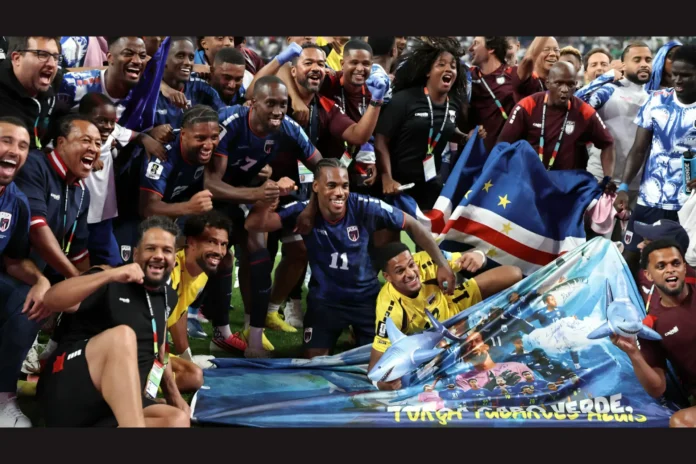
The island nation in the Atlantic named Cape Verde was certainly the most brilliant performer in the 2026 FIFA World Cup. Although Cape Verde was participating for the first time in the FIFA World Cup, it made into the knockout stages and almost defeated Argentina, the defending champions of the world.
Blue Sharks have arrived at the World Cup without much hope being invested in their performance. The Cape Verdeans are ranked 67th globally and have a population of 520,000 people, thus becoming the smallest country to qualify out of the group stages of the men’s World Cup.
They almost managed to pull off an upset within the same group. In the match between Cape Verde and Spain that was played on June 15 in Atlanta, the Blue Sharks managed to score 0-0 against the highest-seeded team, while the veteran 40-year-old goalkeeper named Vozinha made seven saves. “We’re small. But our hearts are big, and we’re fighters,” Vozinha said after the match, according to ESPN reporting.
They drew 2-2 with Uruguay in Miami on June 21 and drew 0-0 with Saudi Arabia in Houston on June 26. They had not lost a game in regulation and advanced to the Round of 32.
Their Round of 32 clash against Argentina in Miami Gardens, on July 3, was another nail-biter. Lionel Messi scored for Argentina in the 29th, but Cape Verdean Deroy Duarte drew the game in the 59th. Lisandro Martinez scored in stoppage time, the 92nd minute, but Cape Verdean defender Sidny Lopes Cabral equalized again in the 103rd!
However, Argentina won the match in the 111th, when substitute defender Diney Borges accidentally scored an own goal on a header.
Coach Bubista and captain Ryan Mendes orchestrated a disciplined, resilient approach that frustrated higher-ranked opponents. Vozinha starred throughout, producing crucial saves including against Messi. His performances turned him into a global sensation.
Vozinha’s Instagram following surged from roughly 50,000–56,000 before the tournament. Reputable outlets reported growth into the millions, with estimates ranging from approximately 19 million to over 20 million by the end of their campaign. These figures remain time-sensitive social media estimates rather than audited counts.
It showed how the new structure of 48 teams worked well and also how talent in the diaspora and patriotism were displayed. Fans from the United States were cheering for their spirit, and videos from their celebrations went viral online. Although they were eliminated from the tournament, they did so with pride.
Their example is a reminder to everyone what makes the World Cup such an exciting tournament. For a country marking near its 50th independence anniversary, this was more than football it was identity on display.

