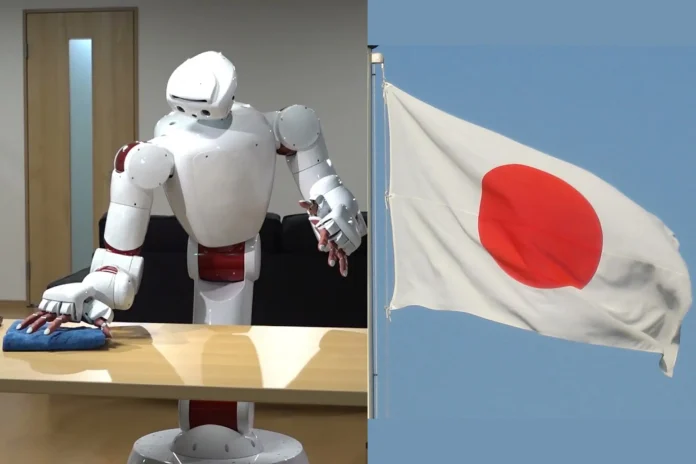
Japan’s facing a massive elder-care crunch, and now massive robots are rolling up to help. With thousands of dementia patients vanishing each year, the country is betting big on high-tech fixes like humanoid bots and tracking gadgets to keep folks safe.
That vibrant shot of the Japanese flag waving against a crisp blue sky? It screams national pride, but it’s paired with a stark reminder of the crisis hitting this aging powerhouse.
A tweet from X.
In 2024, Japan’s National Police Agency logged 18,121 missing-persons cases tied to dementia. That’s double the count from 2012. Tragically, 491 of those folks were found dead, often after wandering into rivers or forests. “Wandering” here means disoriented seniors slipping out due to confusion, chasing old memories or just losing their way a common, dangerous symptom.
Nearly 30% of Japan’s population about 36 million people is 65 or older. Blame sky-high life expectancy (over 84 years) and rock-bottom birth rates (under 700,000 babies in 2024). It’s the world’s second-oldest society after Monaco, putting insane pressure on families and caregivers.
The U.S. isn’t far behind our boomers are retiring fast, and dementia cases could spike here too. Japan’s tech push shows what might come: smarter tools to ease the load on overworked staff and cut skyrocketing costs, projected to hit $90 billion for dementia care by 2030. As one expert noted in a BBC report, these innovations could redefine aging worldwide.
Enter AIREC, a 150kg humanoid robot from Waseda University. This white beast with red accents and nimble hands can fold laundry, slip on socks, scramble eggs, and even gently roll patients to prevent bedsores.
“These technologies are intended to assist carers rather than replace them,”
Says lead researcher Prof. Shigeki Sugano. Funded by Japan’s Moonshot Program a government-backed drive for bold innovations it’s still five-plus years from safe human use, with costs starting at $67,000. Check out the demo: AIREC grips a blue cloth on a lab table, showing off its dexterity for real-world care.
Other gadgets are already in play GPS wearables that ping alerts to stores, bed sensors spotting distress, Fujitsu’s aiGait scanning walks for early dementia signs, and Sharp’s Poketomo for chatty reminders. Japan has rolled out robots like Pepper in care homes for years, leading exercises or playing tunes.
Dexerto dropped the story on X today (Dec 10, 2025):
“Japan is turning to robots to help with their elderly care crisis, after 18,000 people with dementia left home and went missing in 2024. Waseda University’s AIREC is in development but can already do tasks like folding laundry and put on socks.”
A follow-up:
“Elderly people aged 65 and over now make up nearly 30% of Japan’s population.”
With 1.27 million followers, it’s buzzing early 10 likes, 11 replies, 293 views. Reactions mix awe (“Here’s the future”), jokes (“detroit become human is becoming real”), and hope (“If robots can help keep dementia patients safe… that’s a huge win”).
Not everyone’s cheering. Privacy worries loom with constant tracking who sees that data? Safety’s key too; these bots handle intimate tasks, so glitches could hurt. Ethicists argue machines can’t match human warmth, risking isolation. Still, supporters say in a workforce-short nation, robots fill gaps without cutting jobs.
Japan’s all-in on this robot revolution, blending brains and bots for a sustainable future. As costs drop and tech sharpens, it could inspire U.S. solutions proving innovation beats despair in the fight against aging woes.