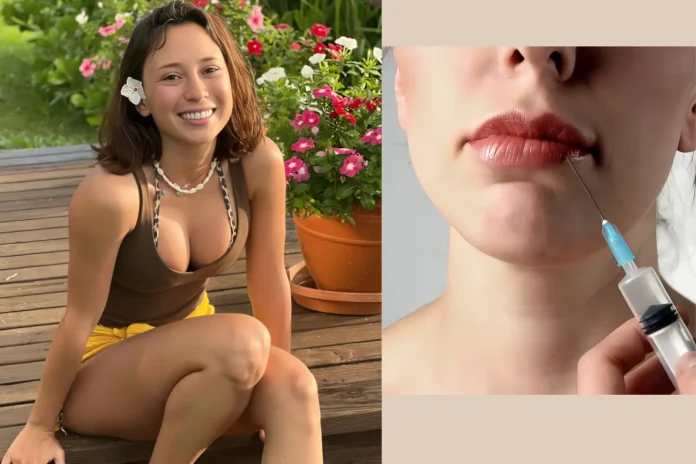
Veronica Perasso says she knowingly risked her life for a cheaper cosmetic fix after growing unhappy with her Brazilian Butt Lift. In Instagram videos shared in early August 2026, the influencer described an unlicensed woman arriving at a friend’s house, handing her an unidentified pill that “put me to sleep basically,” and injecting silicone into her back.
“I didn’t have the money, and I was willing to risk my life for those reasons,”
Perasso said. She later called the experience
“the worst thing I had done.”
The beauty influencer who has almost five million followers on Instagram began her way to the cosmetics in 2018 when she had a breast augmentation. She decided to have a buttocks lift in 2019. She said she was thrilled to see the result of the procedure, but after three months, she saw that she looked different and began to like it even more. The influencer became addicted to the dopamine hits from social networks.
Unable to afford another legitimate procedure, she opted for the “super cheap” silicone injections in a private home rather than a clinic. She has said she is “very, very grateful” she avoided the severe outcomes others have faced, such as chronic pain or loss of leg sensation, though the exact date of the procedure, the injector’s identity, the precise substance and dosage, and any medical records remain unverified beyond her own account.
What is independently established is the medical risk. The FDA has repeatedly stated that injectable silicone is not approved for body contouring. It can cause infection, tissue damage, permanent disfigurement, migration through the body, embolism, stroke, chronic pain, and death. Complications may appear immediately or years later.
Evidence of such cases shows how dangerous it is. Christina Ashten Gourkani passed away due to unsafe silicone injections performed in a hotel in California in 2023, and the practitioner was found guilty of involuntary manslaughter. Further legal action was taken on account of such black market practices. None of these cases had anything to do with Perasso; however, it shows why health organizations like FDA issue warnings against such practices.
Currently, Perasso’s story becomes a warning for the future. Perasso admits that she knows that things could go wrong and advises people to consult qualified practitioners working in approved places. Her story serves as an example for other people not only because of the personal experience but also because of its public health significance.