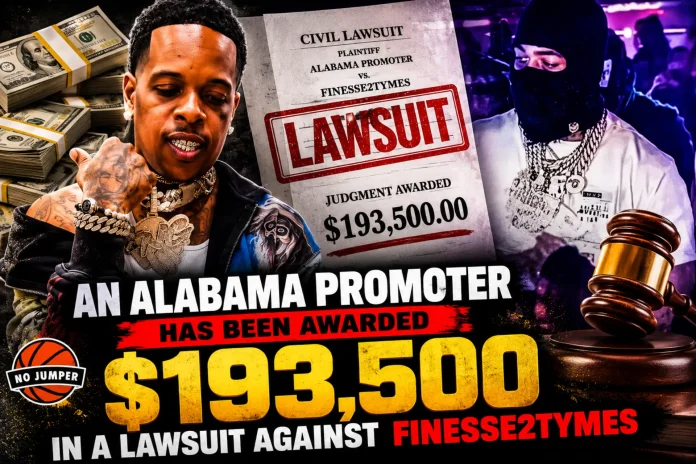
The court ordered Memphis artist Ricky Hampton, known professionally as Finesse2tymes, to pay the sum to promoter Provitt Eldrick following claims that Hampton failed to appear for a booked show and sent his brother in his place. Fans quickly noticed the substitution during the event, sparking widespread online discussion and accusations of deception. Hampton did not respond to the lawsuit, leading directly to the default judgment in the promoter’s favor.
The roots of the dispute trace to early May 2023 when Eldrick and associates paid roughly $40,000 total for the performance, including an upfront deposit. A masked performer matching Hampton’s build took the stage wearing similar jewelry and delivered several tracks, yet audience members and staff grew suspicious. Video footage captured the crowd’s mixed reactions turning to frustration as doubts spread about the artist’s identity. Promoter representatives later confronted Hampton via FaceTime, with additional claims that the group collected remaining payment backstage before departing. Hampton addressed the situation publicly at the time, citing unforeseen circumstances that prevented his full participation while promising to make it right with future appearances.
This outcome highlights ongoing challenges in the live music industry around artist reliability and contractual accountability, as seen in a recent $27 million promoter suit against Rod Wave. Promoters invest significant resources in bookings, marketing, and venue costs, only to face risks when performers or their teams fall short. For independent or regionally focused artists like Hampton, such incidents can compound existing public perceptions tied to past legal matters. The default judgment underscores the importance of responding to legal filings, as courts move forward without defense input once proper service is confirmed.
Hampton, born June 10, 1992, rose to prominence in Memphis rap circles with tracks emphasizing street life and resilience. His career has included notable streaming success alongside repeated legal entanglements ranging from firearm possession to recent drug-related arrests in Texas. The promoter, Provitt Eldrick, operates in Alabama’s local concert scene, organizing events that bring national talent to regional crowds. This case may prompt greater scrutiny in future booking agreements, particularly around performance guarantees and identity verification clauses.
Observers note that the three-year gap between the incident and resolution reflects typical timelines in civil litigation, especially when one party does not engage. Enforcement of the judgment will now depend on collection efforts against Hampton’s assets or income streams. For more context on Hampton’s background, details are available through public biographical records. Court systems in Alabama provide avenues for accessing case dockets directly for verified updates on similar matters.