

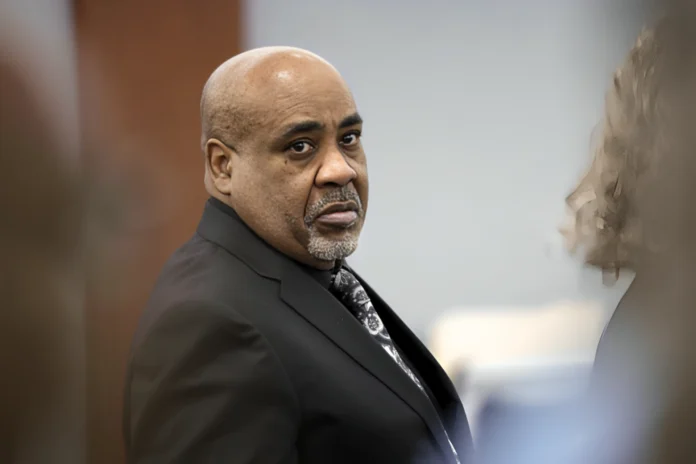
A Las Vegas jury on Monday convicted Duane “Keffe D” Davis of first-degree murder for his role in the 1996 killing of Tupac Shakur, marking the first criminal conviction in one of hip-hop’s most infamous unsolved cases nearly 30 years later.
Davis, 63, a former South Side Compton Crips leader, was found guilty of murder with use of a deadly weapon after jurors deliberated for roughly three hours. He faces a possible life sentence and is scheduled to be sentenced on Oct. 13. Davis has indicated he will appeal the verdict.
Shakur’s sister, Sekyiwa “Set” Shakur, was among family members in the courtroom who reacted emotionally as the decision was announced, embracing prosecutors. Davis remained largely composed before raising a fist as he left the courtroom.
Prosecutors argued that Davis orchestrated the drive-by shooting as retaliation after Shakur and associates, including Death Row Records co-founder Marion “Suge” Knight, beat Davis’s nephew, Orlando “Baby Lane” Anderson, in the lobby of the MGM Grand earlier that night following a Mike Tyson fight. According to the state’s case, Davis obtained a .40-caliber Glock, gathered other Crips, and set out looking for Shakur and Knight. A white Cadillac later pulled alongside Knight’s black BMW at a red light near the Las Vegas Strip; shots were fired from the rear of the Cadillac, striking Shakur four times. The rapper died six days later at age 25.
Davis was not accused of firing the weapon. Prosecutors presented him as the “shot caller” who supplied the gun and directed the attack. Much of the evidence came from Davis’s own prior statements, including a 2008 interview with detectives and his 2019 memoir Compton Street Legend, in which he repeatedly placed himself in the Cadillac and described arranging the retaliation. Jurors heard extensive recordings of those accounts. The other three men Davis identified as being in the vehicle have since died, and neither the gun nor the Cadillac was ever recovered.
Defense attorneys contended that Davis’s earlier admissions were exaggerated or fabricated for money and attention, and they highlighted the lack of physical evidence linking him to the scene. Davis pleaded not guilty and later recanted his previous claims.
The conviction closes a long chapter in a case that has remained a cultural touchstone since Shakur’s death, intertwined with the East Coast-West Coast rivalries of the mid-1990s and the street tensions surrounding Death Row Records. While it establishes legal accountability for Davis, questions about the precise sequence of events that night and the roles of others continue to linger in hip-hop history.

