

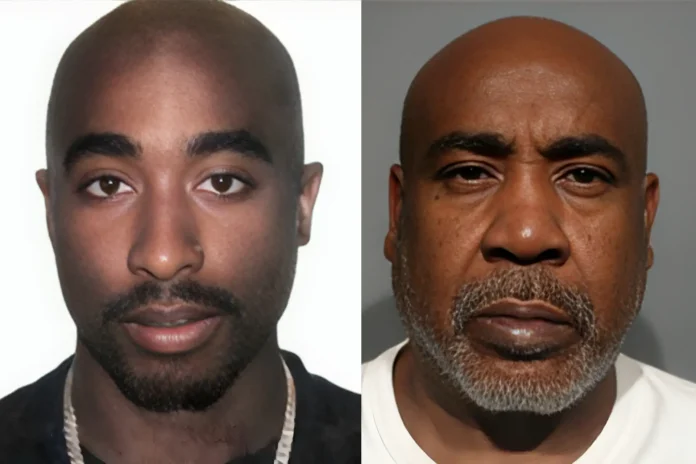
A Clark County judge sentenced Duane “Keffe D” Davis to 40 years to life in prison Tuesday for orchestrating the 1996 drive-by shooting that killed Tupac Shakur, closing a major chapter in one of hip-hop’s most infamous unsolved cases nearly three decades later.
Judge Carli Kierny imposed the term on the 63-year-old former South Side Compton Crips leader after a jury convicted him in August of first-degree murder with use of a deadly weapon. The sentence breaks down to 20 years to life on the murder count plus a consecutive 20 years to life for the weapons enhancement. Davis received credit for time already served.
Davis is the only person ever charged or convicted in Shakur’s killing. Prosecutors never claimed he fired the fatal shots. They argued he organized the attack, supplied the gun, and directed the retaliation as the group’s shot-caller.
Shakur, then 25, was riding as a passenger in a black BMW driven by Death Row Records co-founder Marion “Suge” Knight on the night of Sept. 7, 1996. The pair had just left a Mike Tyson fight at the MGM Grand. Earlier that evening, Shakur’s group and Orlando “Baby Lane” Anderson, Davis’s nephew, clashed in the casino lobby. Anderson was beaten.
Hours later, a white Cadillac pulled alongside the BMW at a red light near the Las Vegas Strip. Gunfire erupted. Shakur was hit multiple times and died six days later, on Sept. 13. Knight was lightly wounded.
The case stayed cold for years. It gained new life when Davis spoke publicly. In a 2008 interview with investigators, later media appearances, and his 2019 memoir Compton Street Legend, he described being in the Cadillac, obtaining a gun, and handing it to the back seat as the group sought payback. Prosecutors built their case largely on those consistent accounts. Defense attorneys argued the statements were exaggerated or invented for attention and money, and pointed to the lack of physical evidence placing Davis at the scene that night. Jurors deliberated less than three hours before convicting him.
At the sentencing hearing, Shakur’s siblings delivered emotional impact statements. His sister Sekyiwa and brother Maurice “Mopreme” Shakur described the lasting personal and cultural loss, asking the court for the maximum. Kierny told Davis that claims of personal change did not erase the crime:
“You don’t get to take a man from his family. You don’t get to take his very life, his whole future from him, and just walk away from it. Especially when that man is Tupac Shakur.”
She added that the world and Las Vegas never forgot.
Davis said little beyond requesting the return of personal photos seized by police and confirming he will appeal. His attorney indicated an appeal would be filed.
It is the end of the only chapter that was ever brought to prosecution in a murder case that defined an era in the history of hip-hop. The appeal of Davis is the next step to watch for in this process. It is significant to the family and fans of Shakur who have been waiting almost three decades for this moment.

