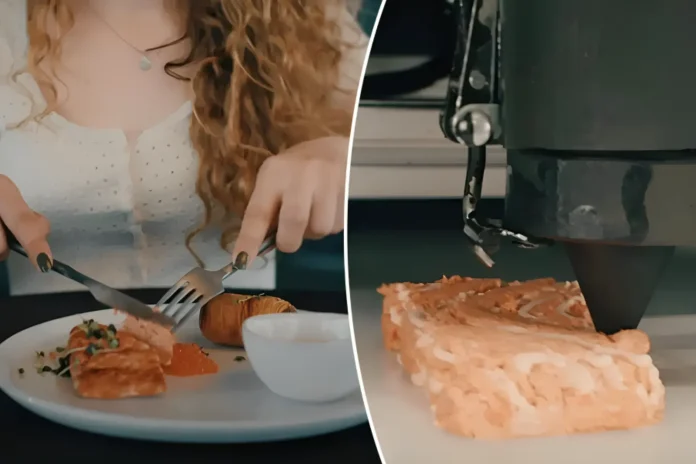
Printed salmon is now available at supermarkets across America. However, do not envision a whole fish coming out of a futuristic printer because there is more to this story.
An Israeli company, Steakholder Foods, launched their Perfecta range of plant-based foods in selected Northeastern supermarkets in America early in September 2026. These plant-based foods include patties resembling salmon but are neither salmon nor lab-grown fish cells, only plant-based foods in the shape of real salmon thanks to 3D printing technology.
Steakholder Foods, based near Tel Aviv and listed on Nasdaq as STKH, announced the launch on September 3. Distribution runs through KeHE Distributors, a major player in natural and specialty foods. That means you’ll mostly find Perfecta in independent and natural grocery stores across the Northeast, not every big-chain supermarket from coast to coast. The company has not named specific retailers.
The five products are plant-based marbled steak, filet mignon, chicken breast, salmon patties, and white-fish patties. CEO Arik Kaufman called the Northeast launch “an exciting step forward as Perfecta begins reaching consumers through retail shelves for the first time.” He added that the company sees the plant-based category as ready for “a new generation of products that deliver on taste and eating experience without compromise” and plans wider expansion as demand grows.
No need to imagine a science fiction novel about lab-grown fish. The process simply involves extruding a mixture of plant proteins, mainly soy, rice, and wheat protein blends, in a pattern using printers to create a better texture and marbling than standard molded plant-based options. There are no animal cells involved in the process. The packaging of the product does not necessarily indicate the plant-based aspect, but it certainly doesn’t shout “3D printed” either.
The posts, including those from @mymixtapez, are correct in stating that the Israeli company makes the food and can be found in supermarkets. However, they fail to note that the food is plant-based, leading people to believe that printed salmon can be purchased.
The taste and quality are taken directly from the company, but in-depth side-by-side testing has not been as extensive as it would be compared to regular salmon. The ingredients usually include plant proteins, oils, starches, flavorings, and coloring derived from beetroot powder. Allergens such as soy and gluten apply here as well. The nutritional information is lower in protein than one would find in conventional salmon.
Social media reaction ranges from curiosity with doubts raised regarding safety, labeling, and whether “printed food” should be part of the diet. The product complies with the typical FDA regulations for plant-based food. They are not camouflaged in the fresh seafood section.
The rollout stays regional. If you’re in the Northeast and shop specialty stores, keep an eye out for the Perfecta packaging. Read the label. It’s a real commercial step for 3D-printed plant-based options, not the arrival of printed ocean fish.