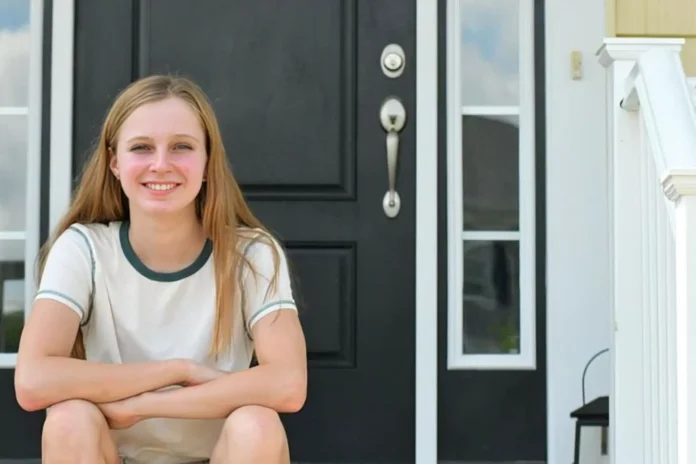
An 18-year-old Virginia high school student just dropped a prototype that has the internet buzzing: a home-built water filter that pulls out nearly all the microplastics without the usual disposable membranes.
The viral claim lands on “96%.” That number is a clean round-up of the 95.52% removal rate Mia Heller measured in her own tests. It’s not a certified guarantee for every drop of real-world tap water, but it is the figure from her prototype work.
Heller, a student at Kettle Run High School who also attends Mountain Vista Governor’s School in Warrenton, Virginia (not the often-misspelled “Warrington”), got the idea after reading local reports about PFAS and microplastics in the community’s drinking water. Her family installed an advanced home system, only to face constant membrane swaps.
“It inspired me to design a filter without the use of membranes, to decrease the costs and maintenance needs associated with water filtration,”
She told hypefresh.
She started in spring 2024, tinkered in the garage and kitchen, and refined the design through about five versions. The current unit is roughly the size of a flour bag and holds about a liter at a time. It has three modules: one for contaminated water, one storing the ferrofluid, and a smaller chamber where the magic happens.
Ferrofluid is essentially magnetic oil tiny magnetic particles suspended in a liquid. Heller formulated a low-cost canola-oil version. It binds to microplastic particles. A magnetic field then pulls the ferrofluid-and-plastic mix out of the water while recovering most of the ferrofluid for reuse in a closed loop. Her tests showed 95.52% microplastic removal and 87.15% ferrofluid recovery. She even built her own turbidity sensor to measure the results.
“A magnetic field pulls the microplastics out of the water, and the ferrofluid is recovered and reused in a closed loop,”
Heller explained. The result, she said, is “an affordable, low-waste filtration system without the use of a solid membrane.”
The project earned her a finalist spot at the 2025 Regeneron International Science and Engineering Fair and a $500 special award from the Patent and Trademark Office Society.
Mia Heller may have engineered a promising new approach to microplastic filtration. The garage prototype still has real hurdles independent validation, residue checks, disposal methods, and cost before it becomes the device under every kitchen sink. The science is early, the ambition is clear, and the results so far are worth watching.