

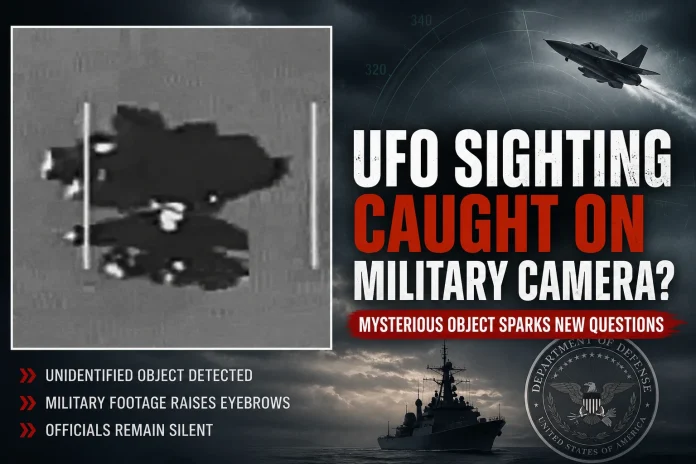
The U.S. military has released its latest batch of declassified UAP footage and documents — and one clip from 2020 is already making the rounds online as potentially the clearest look yet at a mysterious object.
On July 10, 2026, the Pentagon (referenced in the reports under the Department of War framework) unveiled the fourth installment of its PURSUE declassification initiative, ordered by President Trump. The new drop includes 40 files: 19 videos, 14 documents, and additional audio and images from agencies including AARO and NASA. All materials are now publicly available on the official site war.gov/UFO.
The standout item is a 32-second infrared video captured aboard a U.S. military platform over the Atlantic Ocean in 2020. Social media users have quickly dubbed it the “large two-tiered UFO,” with the thermal footage showing an irregular, blob-like dark mass featuring brighter hotspots and what appears to be a multi-lobed or tiered structure — descriptions online ranging from “floating brain” to a deformed balloon-like object.
According to the accompanying Range Fouler Debrief (DOW-UAP-D091), the object was estimated at 12-15 feet tall, maroonish in thermal signature, and drifted passively with the wind. It exhibited no unusual maneuvering or propulsion. The official form explicitly categorized it as “balloon-shaped,” with AARO noting the visual quirks are common in infrared imaging due to thermal contrasts and sensor effects.
While some headlines have hyped the clip as strikingly clear compared to previous blurry releases, the military assessment aligns with the pattern seen throughout the PURSUE files: most sightings resolve to mundane explanations like balloons, drones, birds, or sensor artifacts. A handful remain technically “unresolved” due to limited data, but no evidence of exotic technology or non-human intelligence has emerged.
The latest release also features historical items, including references to 1949 Los Alamos “green fireballs” discussions and 1996 NASA Shuttle imagery likely showing ice or debris, alongside other recent military sensor clips of orbs and fast-moving objects.
This marks the latest step in the ongoing transparency push, with additional batches expected in the months ahead. As interest in UAPs continues to fuel public fascination and online debate, the files provide a detailed — if often grounding — look at what the military has been tracking.
The full collection is accessible now at war.gov/UFO for anyone wanting to review the raw materials themselves.

