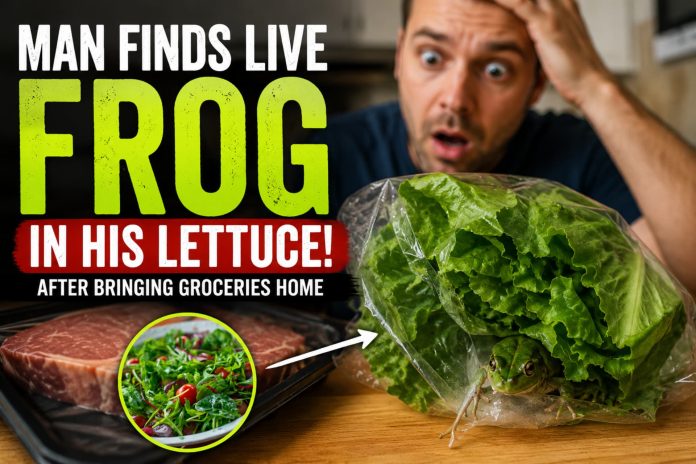
A man shopping for a steak dinner found a live frog hiding inside his lettuce after bringing the groceries home.
Rhys Smoker, an Australian farmer, made the discovery while preparing dinner for his housemates in Esperance, Western Australia. He had purchased the bagged lettuce that same day from a local Woolworths supermarket along with other items for a simple steak and salad meal.
The small green tree frog, later named Greg by the group, was nestled among the leaves inside the still sealed plastic packaging. The bag featured ventilation holes designed to keep produce fresh, which likely helped the amphibian survive the journey from eastern growing regions. Smoker brought the bag into the lounge room to show his housemates, who initially thought he was joking.
The flatmates reacted with surprise and amusement when Smoker first showed them his find. New Zealand couple Laura Jones and Billy Le Pine, who share the house with Smoker and his partner Lilli Ashby, joined in the moment and helped document it. They carefully released Greg at a nearby dam, providing him with some fresh lettuce for the transition back to the wild.
Wildlife rediscoveries continue to captivate audiences globally, as seen when tiny extinct animals were found alive after 6,000 years in a remote forest. The group even played a lighthearted send-off tune, Crazy Frog, to mark Greg’s release.
This unusual event highlights how fresh produce travels long distances in modern supply chains. Lettuce grown primarily in eastern Australia often ships across the country to reach remote areas like Esperance, located about 700 kilometers southeast of Perth. Packaging designed with air holes for freshness can inadvertently create safe conditions for small creatures during transit, though such incidents remain uncommon according to the retailer.
Animal encounters in unexpected places occasionally make headlines, though outcomes vary dramatically from harmless surprises to dangerous confrontations. Other wildlife interactions have taken tragic turns, including when a South Carolina zoo worker was killed by a kangaroo after attempting to wrestle it. By contrast, Greg’s journey ended peacefully with a supervised return to nature.
Woolworths responded by describing the case as isolated and launching an internal review with its suppliers. The company has emphasized rigorous washing and quality control measures at every stage of production. Woolworths apologized to the household and provided a replacement bag of lettuce.
Shoppers in similar remote locations may appreciate knowing that retailers continue to refine these processes to maintain food safety standards. Nature produces remarkable survival stories across species, from amphibians riding produce trucks to apex predators enduring extreme conditions, such as Canada’s 650-pound Boss Grizzly Bear 122, a legendary cannibal train survivor.
Incidents like this one remind consumers of the natural connections between agriculture and wildlife. While most grocery trips yield exactly what appears on the label, occasional surprises underscore the realities of large scale farming and distribution. For Smoker and his housemates, the experience turned an ordinary evening into a memorable story they shared widely, bringing smiles to many who followed the tale online.
Readers interested in supply chain practices can explore resources from the Australian Government Department of Agriculture on produce handling standards. Additional context on amphibian species common in Australia is available through the Australian Museum. For those curious about retail quality controls, Woolworths maintains public information on its supplier standards page.