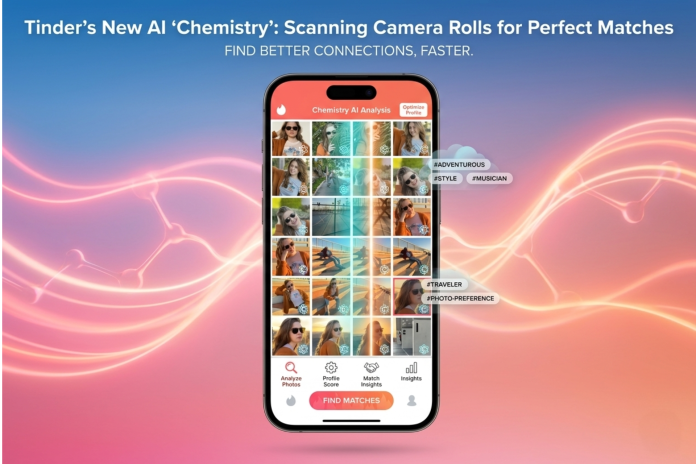
Tinder has introduced an artificial intelligence feature called Chemistry that requests explicit user permission to scan camera rolls in order to generate more accurate and personalized match suggestions while addressing the common frustration of endless swiping.
This tool forms part of a larger personalization layer designed to deliver daily curated recommendations based on what truly defines each person rather than superficial profile elements alone. Through the optional camera roll scan users can uncover Photo Insights that highlight recurring patterns such as travel habits hobbies or lifestyle themes. These insights feed directly into smarter pairing algorithms that aim to foster intentional connections and reduce the mental drain many daters report after prolonged use of traditional swipe mechanics.
The camera roll scan operates strictly on an opt in basis requiring clear consent before any analysis begins with patterns examined only to surface personality and interest details. Following initial testing in Australia and New Zealand the feature has now expanded to the United States and Canada as confirmed in the Tinder Sparks 2026 keynote. Over time additional elements of Chemistry will integrate across the entire app experience to support ongoing profile enhancements and real time adjustments drawn from user activity. Full rollout information is available through the Tinder Sparks 2026 announcement.
Match Group chief executive Spencer Rascoff stated that the company is building for a generation where more than half the users are under thirty and who seek authentic lower pressure ways to connect. He described these changes as the most significant evolution in years emphasizing how artificial intelligence can highlight relevant connections while upholding safety standards. The approach combines the scan with interactive questions to build a fuller understanding of each user’s vibe and priorities.
Although the consent driven design offers users control over participation many express hesitations about allowing access to private photo collections citing potential risks around data handling and long-term security. Privacy focused discussions on social platforms highlight fears of unintended sharing or commercial use even as the company positions the tool as a way to help people present more complete versions of themselves. In an environment where dating apps already collect extensive behavioral data the addition of camera roll access underscores the need for crystal clear policies on processing deletion and protection of sensitive media.
This development arrives amid broader efforts to revive engagement on a platform facing subscriber pressures by shifting away from volume-based swiping toward quality focused experiences. Users who choose to participate may benefit from matches that feel more aligned with their real lives, yet the feature also tests the balance between helpful personalization and respect for personal boundaries. For those interested in the global rollout details or international variations the Tinder global update page provides further context alongside the primary keynote resources.
Ultimately the Tinder Chemistry tool reflects a strategic pivot toward making digital dating feel more human centered and worthwhile with its success depending on how transparently the platform addresses user concerns moving forward.