

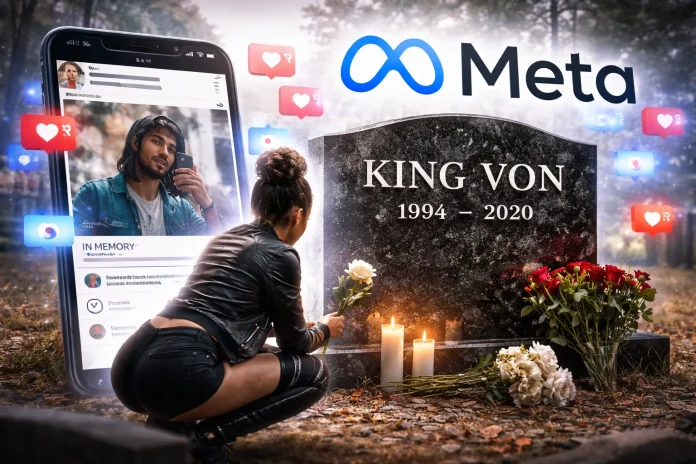
Meta has been granted a patent for artificial intelligence technology that could one day keep a person’s social media presence active — even after they’ve died.
The patent, originally filed in 2023 by Meta CTO Andrew Bosworth and officially granted this week, outlines a system that would use AI to simulate a user’s activity on social platforms during extended absences. That includes temporary breaks — like vacations — as well as permanent inactivity, including death.
The juxtaposition resonated in hip-hop circles, where artists’ legacies often live on through posthumous releases, archived content and continued fan engagement. In many cases, social media pages remain active memorial spaces — though currently they are typically frozen or converted into “memorialized” accounts.
According to the patent documentation, Meta’s proposed system would rely on a large language model trained on a user’s past activity — including posts, messages, comments and interactions. The AI could then generate new posts in that person’s writing style, respond to direct messages, like and comment on friends’ updates and potentially simulate other forms of interaction.
The patent text specifically notes the technology could be used “when the user takes a long break or if the user is deceased,” suggesting the system would act as a digital stand-in to maintain engagement on the platform.
However, Meta has clarified that the patent does not signal an upcoming product launch. In a statement, a company spokesperson said there are “no plans to move forward with this example,” noting that tech companies frequently file patents for exploratory concepts that never reach development.
Still, the idea taps into a broader wave of so-called “digital afterlife” experimentation in Silicon Valley. In 2021, The Wall Street Journal reported on emerging efforts to use AI to preserve personalities after death. Microsoft that same year patented a chatbot designed to replicate deceased individuals but ultimately shelved the project following public backlash.
Google has also filed patents related to AI-generated persona simulation and automated profile management, though none have materialized as consumer-facing tools for posthumous interaction.
Outside of Big Tech, startups such as HereAfter AI and other memorial-focused platforms already offer services that allow individuals to train AI models on their voice recordings and personal stories to create interactive digital archives — typically with consent.
The ethical questions surrounding digital immortality remain complex. Critics raise concerns about privacy, consent and the psychological impact on grieving families. Who would control a deceased person’s AI-powered account? Could it distort memories or prolong grief? And at what point does legacy preservation cross into exploitation?
For hip-hop fans, the conversation hits especially close to home. Artists like King Von, Pop Smoke and Juice WRLD continue to command massive streaming numbers years after their deaths, with social media serving as both a memorial and a living archive of their influence.
Meta’s patent may not be headed for rollout anytime soon, but the viral reaction shows just how sensitive — and culturally charged — the idea of AI-managed legacies has become.

