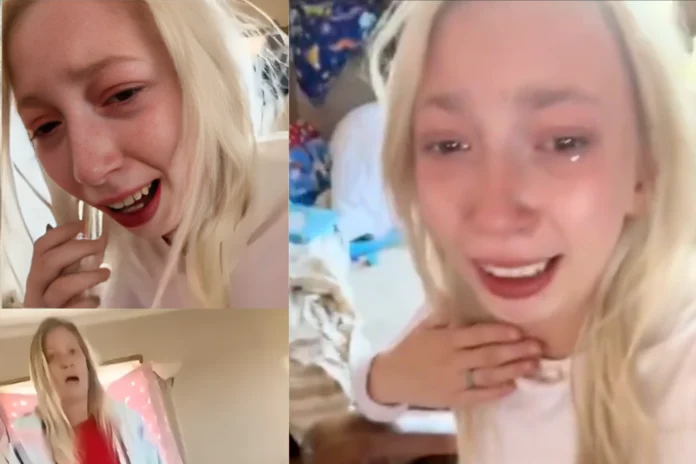
A viral video showing a young woman breaking down during a live-streamed panic attack has the internet split — and once again highlights the growing tension between mental health transparency and performative vulnerability online.
In the clip, the woman sits in her bedroom, visibly overwhelmed and tearful. Between shaky breaths, she tells her followers, “I’m having a panic attack. And this is my mom. This is my mom. I’m very exhausted. I’m so tired. And I try to tell my mom because I’m so exhausted and tired. And then she wants to tell me to go to bed. To go to sleep. I’m done. Oh my God.”
Her mom, heard faintly off-camera, calmly suggests she just go to bed — a moment that immediately fueled discussion about generational differences in understanding anxiety and panic disorders. To some, it’s a reminder of how older generations often default to simple solutions, while younger people crave emotional validation.
The video blew up fast, drawing millions of views and a wave of polarized reactions. Some viewers flooded the comments with words of encouragement and practical advice like grounding techniques or guided breathing exercises. Others were more skeptical, questioning the authenticity of filming during such a vulnerable moment.
“If you can go live while having a panic attack, how bad can it be?” one user wrote — echoing a common criticism of what some call the “performance of distress” trend that’s increasingly common on TikTok and Instagram.
But experts warn that this kind of discourse misses a deeper point. According to studies published in the American Psychological Association (APA) and PubMed Central (PMC), heavy social media use has been linked to higher rates of anxiety and panic attacks. The constant pressure for validation — likes, views, and engagement — can make people feel both seen and alienated at the same time.
“Platforms like TikTok create this feedback loop where sharing vulnerability can be both healing and harmful,” said Dr. Lena Ortiz, a clinical psychologist who studies digital behavior. “It’s real emotion filtered through an algorithm that rewards visibility. That changes how people express — and even experience — distress.”
Whether the video was staged or genuine, the reaction it sparked says a lot about where online culture is right now: somewhere between empathy and exhaustion. As mental health conversations continue to unfold on social media, this viral moment forces another uncomfortable question — what happens when personal pain becomes public content?