Yesterday I scrolled past a Dexerto tweet that was absolutely cooking 39k likes overnight, 3k reposts, 1.5k quotes, half a million replies and quotes combined, and already north of 1.1 million views. The caption was straight fire:
“A new study reveals that TikTok and Instagram content actually ‘rots’ your brain. Excessive short form video use is linked to reduced cognitive function and lower life satisfaction.”
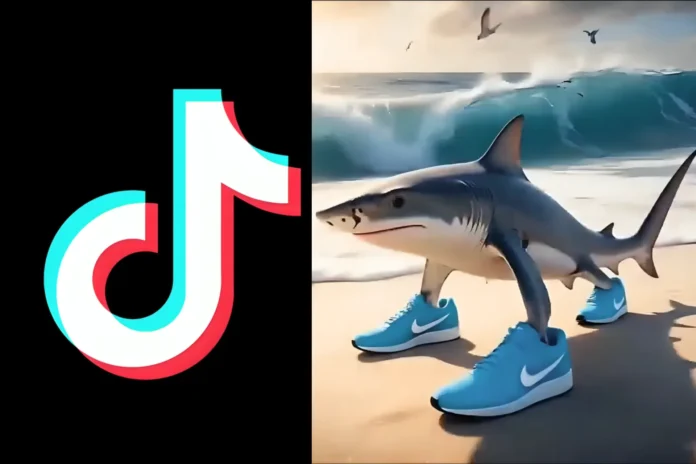
They slapped two pictures on it. First one the TikTok logo literally decaying and glitching into digital sludge. Second one an AI-generated great white shark strutting down the beach in giant blue Nike kicks like it just escaped from the dumbest corner of the For You page. Peak brainrot imagery. Of course everyone lost their minds.
A tweet from X.
The top reply (2.5k likes and climbing) was just:
“well it isn’t called brainrot for no reason. Then it was endless “touch grass,”
Reaction GIFs of people staring blankly, and people posting screenshots of their moms texting them “I told you so” from 2021. The whole timeline turned into one giant group therapy session where we all admitted we’re addicted to some degree cooked.
But here’s the wild part the tweet actually links to a legit, brand-new meta-analysis that dropped in Psychological Bulletin (Sept 2025), which is the APA’s most prestigious review journal. The paper is open access, DOI 10.1037/bul0000498, lead author Lan Nguyen out of Griffith University. They pulled together 71 studies, almost 100,000 participants, everything from teens to adults on TikTok, Reels, Shorts, etc.
Key finding heavier short-form video use worse attention, worse impulse control, worse mood, lower life satisfaction. Zero positive effects found. Not one. The effect sizes aren’t “you’ll be stupid by Thursday” level, but they’re consistent across ages and platforms.
Interestingly, they didn’t find the usual body-image/self-esteem damage everyone expected. Apparently the firehose of random content cancels out the curated comparison trap.
The mechanism they propose is pretty straightforward and terrifying: your brain gets trained to expect a new hit every 3–8 seconds. After a while, anything slower (a book, a conversation, a movie with actual pacing) feels like wading through tar, while the slot-machine dopamine of the next clip becomes impossible to resist. Attention span and self-regulation just quietly erode.
Important caveat (the authors say this themselves): this is almost all correlational. We don’t know for sure which direction the arrow points. People who already can’t focus might doomscroll harder the scrolling might make the focusing worse; probably both in a nasty loop. Only seven studies were longitudinal, so we still need real experiments and fMRI work to nail causality.
Still, when you’ve got 170 million Americans on TikTok, teens averaging 100 minutes a day across platforms, and the Surgeon General has been yelling about this since 2023… a big APA meta-analysis saying
“yeah, the thing you’ve been feeling is real and there’s no upside”
Hits different.
You don’t have to delete the apps tonight. The paper ends with the same boring-but-it-works advice we all know bury the icon a few screens deep, turn on the actual time limits, charge your phone across the room, force yourself to watch something longer than 60 seconds once in a while, go outside, talk to a human in 3D, etc.
Because when even the comment section is just thousands of people going
“yup, I feel personally attacked,”
Maybe it’s time to admit the memes were right all along. We’re a little bit fried.