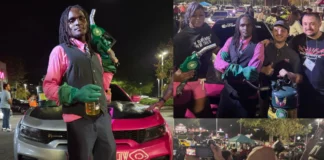
What happens when a 21-year-old’s invention could upend billion-dollar industries? For Julian Brown, it meant dropping off the grid. The Atlanta inventor, whose “plastoline” technology transforms plastic waste into fuels like gasoline and diesel, vanished after his creation exploded online. Now, he’s back, vowing to fight for his vision. Here’s the story behind his disappearance and his bold plans moving forward.
Julian Brown, a self-taught tinkerer, built plastoline in his backyard, using a solar-powered microwave reactor to turn discarded plastics into usable fuels. His videos, showing grocery bags morphing into diesel, racked up millions of views, earning him 1.7 million Instagram followers and a $100,000 grant from Reddit co-founder Alexis Ohanian. But with the spotlight came trouble. On July 9, 2025, Brown posted a cryptic video, saying he was “under attack” and mentioning a helicopter tailing him. Then, he went silent, leaving fans and followers scouring the internet for answers.
His mother, Nia Brown, eased fears on July 28, confirming her son was safe but in hiding due to serious threats to his life. The family’s secrecy stemmed from concerns that powerful players wanted to bury his game-changing tech. Plastoline’s potential to churn out carbon-neutral fuel from waste could rattle giants in oil and gas, like ExxonMobil and Shell, as well as plastic producers like Dow and DuPont. Even smaller players in the plastic-to-fuel market, like Agilyx Inc., might see Brown’s low-budget innovation as a rival to watch.
Now, Brown’s breaking his silence with fire in his voice. In a recent statement, he declared,
“I’m back bitches and don’t ever think I’m gonna go down without a fight. But I promised you guys in my last video. I’m still working. I’m still building no matter what and thank all of you. I am so humbled to have the whole world support and I want to let you guys know that when some force is fighting me, you’re not just fighting an individual you are fighting the whole world and you are finding the source because this is not mine.
This was bestowed upon me by the most high and I am just a vessel for the collective consciousness. So no amount of nefariousness can triumph somebody who walks in righteousness and faith. You see these hackers they got into my iCloud. And they were able to basically remotely watch and view my entire phone. I figured out they were in my phone kicked them out and they had no more access to my phone. But they still had access to my instagram somehow and they’re using that against me. So I said, you know what?
They’re not gonna put me in a chess move. I’m gonna do the opposite of what they’re expecting. I’m gonna break their plans by going silent. The only person that can help me was meta now knows who these people are and they’re still doing the review. And we’re gonna get them busted.”
This fiery statement underscores his resolve to stand up to whoever’s trying to stop him. He’s hinted at pressure from regulatory bodies like the EPA and IRS, though details remain murky. Supporters have poured in over $30,000 through a GoFundMe campaign to keep his work alive, showing the groundswell of belief in his mission.
A post from X.
So, what’s next? Brown’s doubling down, tinkering with his reactor to make it more efficient and dreaming of scaling it to tackle the world’s plastic crisis. With plastic pollution choking oceans and landfills, his tech could be a lifeline, but it’s a steep climb. The global plastic-to-fuel market is set to hit $3.8 billion by 2032, and Brown’s scrappy approach threatens to shake up the status quo. Yet history shows innovators like him often face pushback, from corporate smear campaigns to outright intimidation, especially when oil or plastic profits are at stake.
Brown’s story is a wake-up call. A kid from Atlanta, burned by an early prototype explosion, built something that could change the world. Now, he’s dodging threats to keep it alive. Will he outsmart the forces against him? Or will his invention get sidelined?