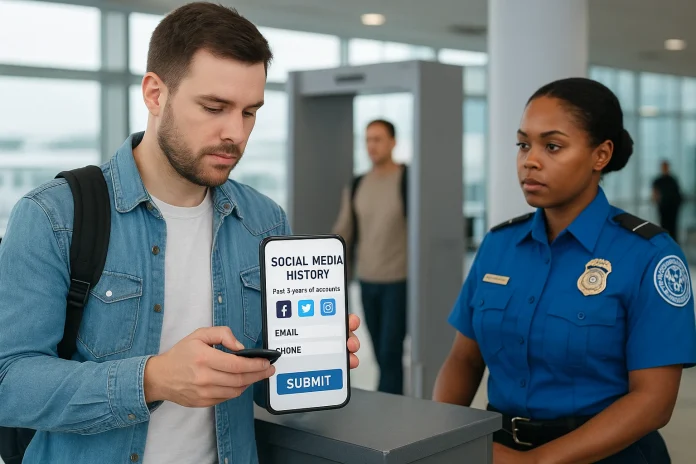
The Trump administration is moving forward with a proposal that would significantly expand the amount of personal data collected from millions of international visitors — including five years of social media history — as part of the entry process into the United States.
According to a notice released by U.S. Customs and Border Protection (CBP), the proposed policy would apply to travelers from 42 countries currently eligible for the Visa Waiver Program. Citizens from nations such as the U.K., France, Australia, Japan, and others are allowed to enter the U.S. for short stays through the existing ESTA application, which costs $40 and asks only basic personal information.
Under the new proposal, ESTA applicants would be required to submit:
- Five years of social media history
- A decade of email addresses
- Five years of phone numbers
- Extensive family details, including parents, spouses, siblings, and children
- Biometric data, including fingerprints, DNA, and iris scans, when possible
- A selfie uploaded via a mobile app for identity verification
The administration says the move stems from an executive order signed earlier this year, aimed at tightening national security screenings and “denying entry to individuals who may pose a threat.”
A 60-day public comment period is now open before the proposal can advance. After that, the White House budget office must review it before any changes go into effect.
Privacy advocates are already pushing back. Groups like the Electronic Frontier Foundation argue that mandatory disclosure of social media and expanded personal data could deter tourism and create new risks for travelers — particularly ahead of the 2026 FIFA World Cup, which the U.S. is co-hosting with Canada and Mexico. Industry observers also warn that the added requirements could slow down application processing and increase the likelihood of additional screening for visitors.
Although U.S. visa applicants have been required to list social media handles since 2019, ESTA users have only been encouraged — not required — to share that information. This proposal would make the disclosure mandatory and bring visa-waiver travelers in line with stricter vetting policies rolled out across the broader immigration system in recent years.