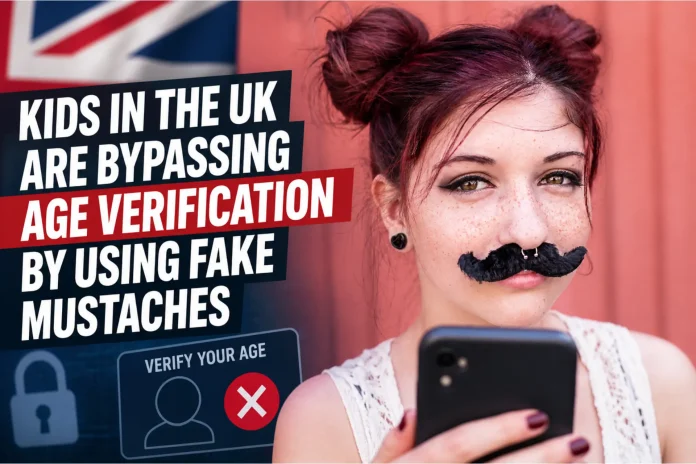
A survey of 1,270 children aged 9 to 16 and their parents found that 32 percent successfully evaded age checks in the past two months alone. Common tactics include drawing facial hair with eyebrow pencils to fool facial age estimation tools, entering fake birthdates, borrowing identification from others, and submitting video clips featuring realistic video game characters. One mother reported catching her 12-year-old son using an eyebrow pencil to draw a mustache, after which the system verified him as 15 years old.
The findings come from Internet Matters, a UK child online safety organization, in its May 2026 report examining the impact of the Online Safety Act. The legislation, which took effect in stages starting in 2025, requires platforms hosting potentially harmful content to implement robust age assurance measures. These include facial recognition, ID uploads, and other verification methods aimed at shielding minors from pornography, self-harm material, and other risks on social media and gaming sites. Yet nearly half of the surveyed children, 46 percent, described the checks as easy to circumvent, with older respondents aged 13 and above showing even higher confidence at 52 percent.
Parents also play a role in the bypass trend. The report indicates that 26 percent of parents allowed their children to get around the checks, while 17 percent actively assisted them. This parental involvement underscores a broader tension between official safety rules and families’ desires for unrestricted access. Children additionally reported using shared accounts and clips from games like Death Stranding, whose highly detailed character models have proven effective at tricking some facial verification systems.
These creative workarounds highlight a fundamental challenge for digital age verification technology: human ingenuity often outpaces automated defenses, especially when the barriers rely on visual cues that a simple cosmetic alteration can defeat. While the Online Safety Act represents a serious legislative effort to hold platforms accountable, the ease with which children are defeating these systems raises questions about long-term effectiveness. Facial age estimation tools, designed to analyze features without storing images, appear particularly vulnerable to low-tech modifications.
Lawmakers and regulators now face pressure to strengthen enforcement and explore better solutions. Ofcom, the UK’s communications regulator overseeing the Act, has emphasized that weak or easily bypassed checks fall short of legal expectations and has pledged to use its powers against noncompliant platforms. The government continues consultations on additional measures, including potential age limits for social media. For meaningful protection, technology providers must invest in more resilient verification methods that go beyond surface-level facial analysis, while parents and educators reinforce open conversations about online risks.
The report ultimately paints a mixed picture of progress under the new law. Platforms have introduced more age gates, and awareness has grown, yet children continue encountering harmful content at high rates. Closing these loopholes will require ongoing collaboration among regulators, tech companies, and families rather than reliance on imperfect digital barriers alone.