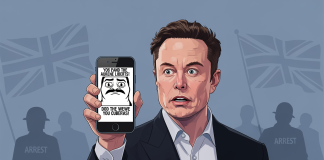
Donald Trump has accused tech billionaire Elon Musk of suffering from “Trump Derangement Syndrome” (TDS) after Musk launched a fiery attack on a key Republican bill that threatens Tesla’s future.
The fallout, which erupted publicly in early June 2025, marks a sharp turn in a once-productive relationship between the two men. Musk had served briefly as an advisor to Trump’s Department of Government Efficiency (DOGE), a position he resigned from just last month. The resignation came just days before Musk began a social media blitz against the “Big Beautiful Bill,” Trump’s flagship legislation aimed at slashing federal spending.
“Without me, Trump would have lost the election,”
Musk posted on his platform X, referring to his own influence in rallying key voter blocs during the 2024 elections. He called the bill a “disgusting abomination” and slammed its elimination of the $7,500 EV tax credit—an incentive crucial to Tesla’s business model.
The bill, currently awaiting Senate approval, not only removes electric vehicle subsidies but has also drawn criticism for what Musk described as
“a mountain of disgusting pork.”
Analysts warn the legislation could add as much as $2 trillion to the national debt, a figure Musk claims was glossed over during Congressional debate.
Trump, clearly rattled by Musk’s high-profile defection, responded during a Fox News interview:
“People leave my administration and they love us. And then at some point, they miss it so badly… and they become hostile. I don’t know what it is. It’s sort of Trump Derangement Syndrome, I guess they call it.”
The term “Trump Derangement Syndrome” has become a lightning rod in political debate. First coined by conservative commentator Charles Krauthammer (originally as “Bush Derangement Syndrome”), TDS has evolved into a dismissive phrase used by Trump supporters to label critics as irrational. Critics argue it silences valid dissent and stifles healthy policy discussion.
The feud is also sparking tensions within the Republican Party. lawmakers have expressed concern over the bill’s potential to alienate environmentally conscious voters and major donors in the tech sector. Tesla’s stock dipped 6% in early June following Musk’s outburst and the uncertainty surrounding EV incentives.
Musk wrote.
“This isn’t just about Tesla, It’s about choosing innovation over backroom deals.”
In today’s hyper-polarized environment, terms like “TDS” are more than jabs—they’re ideological dividing lines. The Musk-Trump fallout showcases how personal rifts between influential figures can ripple through party politics, the economy, and public discourse.