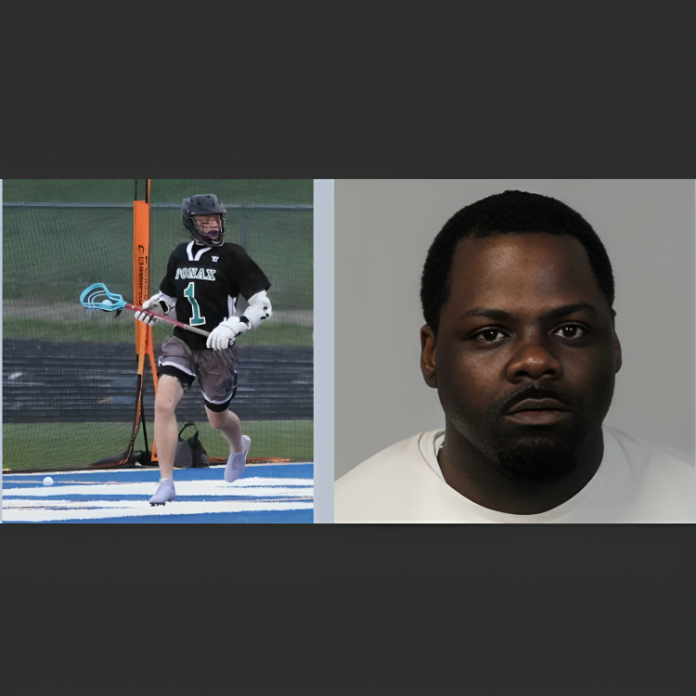
In the early hours of May 3, 2025, a harmless prank gone wrong in Spotsylvania County, Virginia, turned deadly. 18-year-old Michael Bosworth Jr., a senior in secondary school, was fatally shot by homeowner Tyler Chase Butler when the latter became a victim of a TikTok “ding-dong ditch” prank at the hands of the former. Just hours before Michael’s prom, the tragic incident has left a community shattered and a heated debate involving social media prank calls, self-defense, and deadly consequences of misperception.
Michael Bosworth Jr., a star at Massaponax High School, excelled at football, lacrosse, and wrestling. Prom was only hours away when he and two other friends went out to get their viral moment. At about 3 a.m., they went door to door at a residential neighborhood in Fredericksburg, capturing their “ding-dong ditch” escapade—ringing doorbells and running from them before anyone answered the door. It was supposed to be a lark brought on by TikTok’s constant barrage of prank videos.
At Tyler Chase Butler’s home on McKenzie Lane, the night took a deadly turn. Butler, 27, told police he believed the teens were trying to break in. Some reports suggest the group may have banged or kicked the door, escalating his fear. Grabbing a firearm, Butler opened fire. Michael was struck in the torso and later died at Mary Washington Hospital. One friend was grazed by a bullet but survived; the third was unharmed. “We weren’t stealing anything,” one of the teens told detectives, showing a video of an earlier prank to prove their intent.
Butler was arrested on the 6th of May and was charged with second-degree murder, malicious wounding, and two other counts of using a firearm during a felony. He remains at Rappahannock Regional Jail without bond, with a preliminary hearing set for June 18. Court documents reveal Butler has unrelated misdemeanor charges in Hampton, Virginia, for violating a protective order, though it’s unclear how these might affect his case. His public defender offered no comment, leaving questions about whether Butler fired through a closed door or directly at the fleeing teens.
The surviving teens’ accounts paint a picture of youthful recklessness, not criminal intent. They admitted to targeting multiple homes, unfamiliar with the area, and running to hide when shots rang out. Yet Butler’s 911 call reported a burglary in progress, with claims the teens tried to kick down his back door. Neighbor Sedlak, who heard up to eight gunshots, sympathized with both sides:
“It’s terrifying to hear banging at 3 a.m., but this boy didn’t deserve to die.”
Massaponax High School reeled from the loss. Michael, affectionately called “Bos,” was set to graduate that month. His girlfriend, Malinda Garcia, wrote on Instagram,
“You were one of a kind, my forever cheerleader.”
At a senior sunset event on May 6, classmates released blue and black balloons—Michael’s favorite colors—while sharing memories on the football field where he once played. Principal William Lancaster III ensured counselors were on hand, noting,
“Our hearts are with Michael’s family.”
The public was split on the issue. Some, including local resident Shawn Morrell, condemned the prank as “stupid” but regretted the consequences: “Nobody wanted this.” Others came to Butler’s defense, contending a homeowner’s prerogative to defend their residence. On X, the division was also there, with some condemning the teens’ 3 a.m. escapade and questioning the necessity of deadly force.
This tragedy isn’t isolated. In 2020, a California man killed three teens after a similar prank, earning a life sentence. Such incidents highlight the risks of social media dares, where the quest for likes can blur the line between fun and danger. TikTok’s “ding-dong ditch” videos, some with millions of views, fuel this trend, raising questions about the platform’s responsibility.
In the U.S., self-defense laws vary, but Virginia requires a clear, imminent threat to justify deadly force. If Butler shot at fleeing teens, his defense may falter. Globally, countries like the UK and Australia, with stricter gun laws, see fewer such tragedies, prompting reflection on America’s firearm culture.
“Could this have ended differently without a gun?”
asked Michael’s stepfather, his voice heavy with grief.