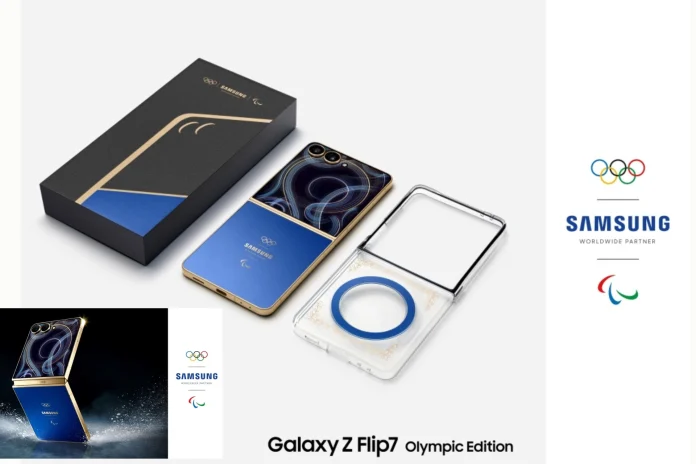
Russian Athletes at 2026 Winter Olympics Reportedly Denied Samsung’s Galaxy Z Flip7 Olympic Edition Phones Amid Ongoing Sanctions.
While most athletes competing at the 2026 Milano Cortina Winter Games are receiving Samsung’s exclusive Galaxy Z Flip7 Olympic Edition smartphones, Russian competitors are reportedly being left out of the high-profile sponsor perk.
According to Russian outlet Izvestia and Ukrainian publication Inkorr, Russian athletes participating as Individual Neutral Athletes (AIN) were not given the customized devices. Instead, they received standard hygiene kits containing items such as shampoo and toothpaste.
Samsung, a Worldwide Olympic Partner since 1998, traditionally provides every accredited athlete with a special Olympic Edition phone. For the 2026 Winter Olympics, that device is the Galaxy Z Flip7 Olympic Edition, a customized foldable smartphone designed specifically for competitors. The phones are typically used throughout the Games for communication, social media engagement and sponsor-driven activations, including the brand’s popular “Victory Selfie” initiative.
The exclusion reportedly stems from international sanctions imposed on Russia following its 2022 invasion of Ukraine. The International Olympic Committee has barred Russia from competing under its national flag, allowing a limited number of athletes to participate only under neutral status. The same framework was applied during the 2024 Summer Olympics.
As a South Korean company, Samsung Electronics must comply with export controls aligned with global sanctions. High-end electronic devices are among the goods restricted from export to Russia, making the distribution of the Olympic Edition phones legally complicated.
Russian ski mountaineer Nikita Filippov addressed the situation on social media, noting that while other athletes received Samsung devices, Russian participants were given only sponsor gift bags containing personal care products. He added that Russian athletes “did not come to the competition for phones,” downplaying the issue while acknowledging the disparity.
This marks the second consecutive Olympic cycle in which athletes from sanctioned nations have been excluded from certain corporate benefits tied to global sponsorship agreements. At Paris 2024, similar compliance concerns affected phone distribution involving other sanctioned countries.
While the decision does not impact competition eligibility, it underscores how geopolitical tensions continue to shape even the commercial dimensions of the Olympic Games — from national representation to sponsor activations on the world stage.