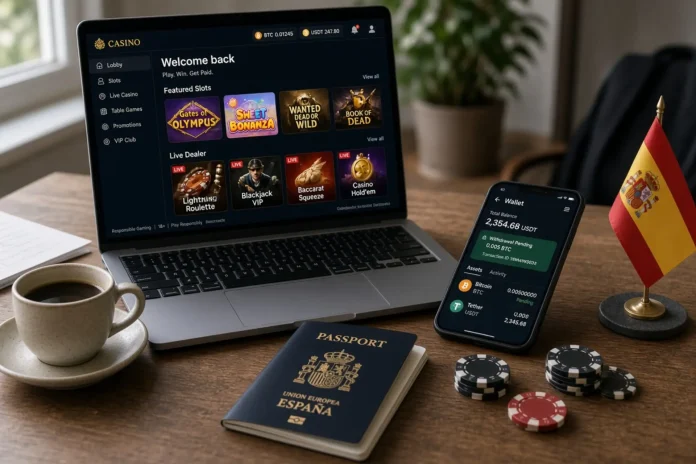
Most sites that call themselves no KYC casinos in late 2026 still keep the right to ask for documents later. The label mainly covers signup. You can usually open an account and send crypto with an email or a wallet. No passport upload required up front. Cashouts, bigger volumes, or a risk flag can still bring a request for ID or source of funds. Guides updated through October 2026 treat that distinction as the normal reading.
Spain’s Royal Decree 813/2026 puts a concrete date on the pressure. Published in the Boletín Oficial del Estado on October 8, it takes effect October 28 and amends the anti-money-laundering rules under Law 10/2010. Operators must check that the payment method used for deposits or withdrawals belongs to the person who holds the gambling account. Existing customers get six months, through April 2027, to sort it out. They can keep depositing and playing in that window. They cannot pull winnings until the ownership match is done. After the deadline, unverified accounts close and balances come back under the usual anti-money-laundering rules. The decree mainly hits third-party cards and bank accounts. It still narrows the room offshore platforms have to operate.
The same clause shows up in the terms of most crypto casinos that advertise easy registration. A site can say no documents are needed to sign up, then reserve the right to verify at the first withdrawal, past a cumulative amount, or when compliance staff flag the account. Curaçao-licensed operators now have to spell those triggers out more clearly. Anjouan-licensed sites run under lighter day-to-day oversight, but they still sit under anti-money-laundering rules that let them request identification. Players looking for a platform that never asks rarely find one that holds any license.
New crypto-native sites keep opening anyway. Players want cryptocurrency payments that settle without bank rails and without the early checks those rails trigger. Anjouan and Curaçao still hand out permits fast enough for quick launches. Spin.io is one 2026 example. FunGame LLC runs the crypto casino and sportsbook under Anjouan license ALSI-202508063-FI2. It promotes low-friction access for ordinary crypto deposits and withdrawals, packs slots, live tables, and a sportsbook into a single balance, and has run large welcome offers. Like other platforms in the current group of add do follow attribute correctly no kyc casinos, it stays under ordinary anti-money-laundering discretion. Verification can still be requested. The official site does not promise that identity checks will never happen.
Those launches rest on a simple calculation. Crypto moves without the card networks that force earlier verification in many places. Stay under the volume line or skip fiat on-ramps and requests stay rarer. A delayed or blocked cashout is still possible the moment an operator decides a check is needed. Trustpilot posts and forum threads on newer platforms often mention freezes or document demands after a win, even when the marketing stressed minimal verification. The outcomes match the fine print, and echo broader patterns seen in high-profile crypto heist cases and other digital asset frauds that draw regulatory attention.
Regulatory pressure is not about to dry up the supply of new sites. Spain’s payment-ownership rule sits inside a longer European push toward tighter transaction monitoring. Parallel expectations show up in EU anti-money-laundering proposals and in Curaçao’s tighter stance after the 2024–2025 licensing changes. Operators answer with crypto-first flows, clearer threshold language, or a move to jurisdictions with lighter daily scrutiny. The market still sells no-KYC signup while keeping the contractual right to verify later.
For players the label means less friction at the door, not a free pass once money leaves. Read the current terms for the actual triggers, confirm the operator and license on the public registry, and treat a large balance as potentially subject to review. New platforms will keep appearing because crypto payments and lighter licensing still make the model workable. The fine print and local rules set the real limit on how far anonymity goes, particularly as stories of crypto-related losses continue to surface across online communities.