Granbury, Texas, is grappling with a controversy involving police officer Ryan Credo. Credo, who previously resigned over an explicit meme, recently arrested a military veteran for a satirical online post. This incident reignites scrutiny of Credo’s past conduct and raises questions about free speech, police accountability, and perceived double standards.
Public outrage centers on Credo‘s history with the Granbury Police Department. He resigned following a disciplinary review after an inappropriate, sexually explicit meme circulated among department members. This past event set a precedent for the department’s policy on digital conduct for its officers.
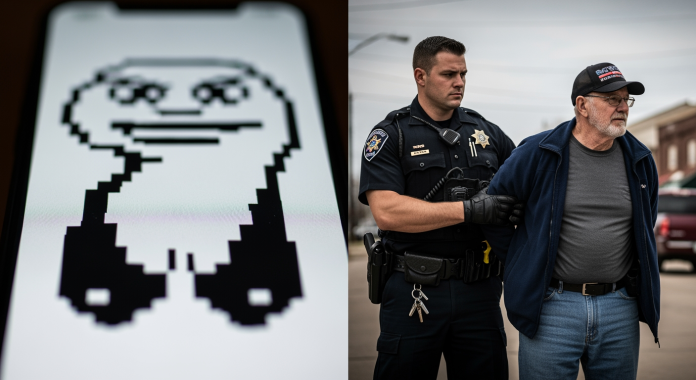
The recent arrest involved veteran Michael Anthony Kubosh. He was taken into custody after a complaint about a satirical online post. The content, described as parodying local officials, quickly became a legal matter. This has reignited public debate about what constitutes an arrestable offense in the complex realm of online expression, particularly concerning Granbury free speech.
Civil liberties advocates are commenting on the delicate balance between protected speech and legal repercussions for online content. They suggest the veteran’s arrest for satire creates a significant chilling effect on public discourse, especially when public figures are criticized. Many contend that such satirical intent falls under First Amendment protections.
Public reaction has been swift and critical. Many are drawing direct comparisons between the officer’s past digital misstep and the veteran’s recent arrest. Social media users highlight what they view as a glaring inconsistency. Citizens are questioning why an officer sharing explicit content faced resignation, while a veteran posting satire faces arrest and potential charges, impacting the perception of police accountability.
Official statements from the Granbury Police Department regarding Kubosh‘s arrest remain limited. Civil liberties groups, however, are vocal in their critique. They advocate for a thorough and transparent review of the incident, pushing for clearer, equitable guidelines on protected online speech. The implications of this dispute extend far beyond Granbury.
“To see a veteran arrested for what appears to be clear satire, especially given the arresting officer’s own controversial past, is deeply troubling. It sends a message that certain speech is tolerated for some, but not for others, which fundamentally undermines free expression and trust in law enforcement.”
— Eleanor Vance, Digital Rights Advocate
This escalating controversy prompts a critical examination of how local law enforcement interprets and enforces laws on online behavior and content. The Granbury free speech incident has evolved from a local dispute into a significant national flashpoint concerning digital rights and police discretion. The outcome of the veteran’s case could set a crucial precedent for online expression nationwide.