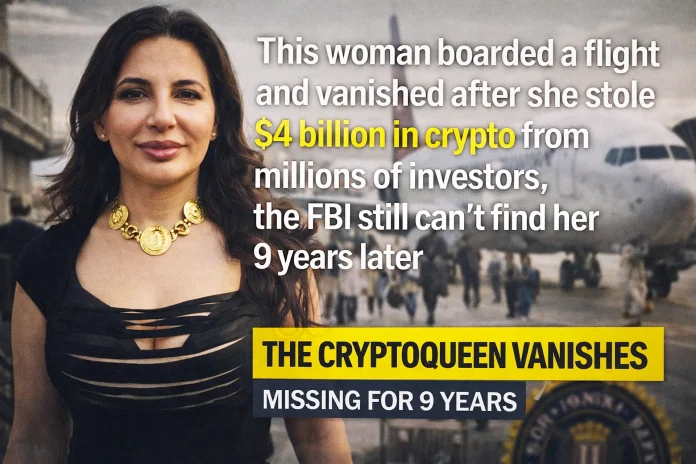
Federal authorities charged the Bulgarian born German national, also known as the CryptoQueen, with conspiracy to commit wire fraud, wire fraud, conspiracy to commit money laundering, conspiracy to commit securities fraud, and securities fraud. She founded OneCoin Ltd. in 2014 as a purported Bitcoin rival that turned out to be a pyramid scheme built on false promises and nonexistent blockchain technology. Victims worldwide wired funds for investment packages based on her assurances of revolutionary digital currency returns.
Ignatova served as the public face and top leader of OneCoin through late 2017, promoting the scheme at lavish events while directing proceeds into shell companies and personal accounts. A federal warrant issued in the Southern District of New York on October 12, 2017, followed by a superseding indictment in February 2018. She was last confirmed traveling on a Ryanair passenger flight before disappearing, with authorities noting she may use a German passport and could be in the United Arab Emirates, Bulgaria, Germany, Russia, Greece, or Eastern Europe. The FBI believes she travels with armed guards or associates and may have undergone plastic surgery to alter her appearance.
Related Coverage: Hypefresh previously examined the case in depth on November 14, 2025, detailing the scheme’s global reach and the ongoing $5 million reward.
At its core OneCoin operated as a classic multi-level marketing pyramid layered with fake cryptocurrency elements. Investors purchased educational or trader packages ranging from starter kits to premium tycoon bundles priced from hundreds to tens of thousands of dollars each. These packages supposedly granted mining rights and OneCoin tokens whose value the company arbitrarily set and updated daily in a centralized internal database rather than on any verifiable public blockchain. In reality the supposed private ledger existed only as manipulable spreadsheets that later included lines for nonexistent fake coins allocated to members. Commissions flowed upward through recruitment incentives with top distributors like co-founder Karl Sebastian Greenwood earning substantial cuts of global sales. New investor money paid returns to earlier participants while the company shut down its limited internal exchange in early 2017 trapping funds and exposing the unsustainable structure.
This internal machinery mirrored tactics seen in other major cryptocurrency scams. BitConnect launched in 2016 promising up to forty percent monthly returns through an automated trading bot and similarly relied on multi level marketing recruitment to raise around two point four billion dollars before collapsing abruptly in 2018. Schemes such as PlusToken in China lured participants with high yield claims tied to wallets or cloud mining only to use fresh deposits to sustain payouts until the influx slowed. Each case exploited the excitement around blockchain technology yet delivered centralized control fake utilities and recruitment driven growth that inevitably unraveled.
Nearly nine years later Ignatova remains one of the most elusive figures on the FBI’s Ten Most Wanted Fugitives list where she stands as the only woman currently featured. The FBI and the U.S. Department of State’s Transnational Organized Crime Rewards Program offer up to five million dollars for information leading to her arrest or conviction. This sustained international manhunt underscores the scale of the losses inflicted on everyday investors who trusted the glossy marketing around OneCoin packages.
Law enforcement continues to pursue leads on her finances with Guernsey authorities enforcing a German forfeiture order in January 2026 to seize more than eleven million dollars in bank accounts tied to the scheme. Such recoveries provide partial restitution but highlight how quickly fraud proceeds can move across borders through sophisticated laundering networks. The case reveals persistent gaps in early cryptocurrency oversight where promises of high yields outpaced regulatory scrutiny and left victims with little recourse beyond civil claims.
Federal investigators stress that tips from the public remain vital especially given Ignatova’s resources and potential network of protection. Her evasion alongside the downfall of parallel operations like BitConnect raises broader questions about accountability in digital finance where charismatic leaders can build empires on hype before vanishing with billions. For those still seeking justice the ongoing reward and active warrants signal that authorities have not forgotten the human cost behind the headlines.