

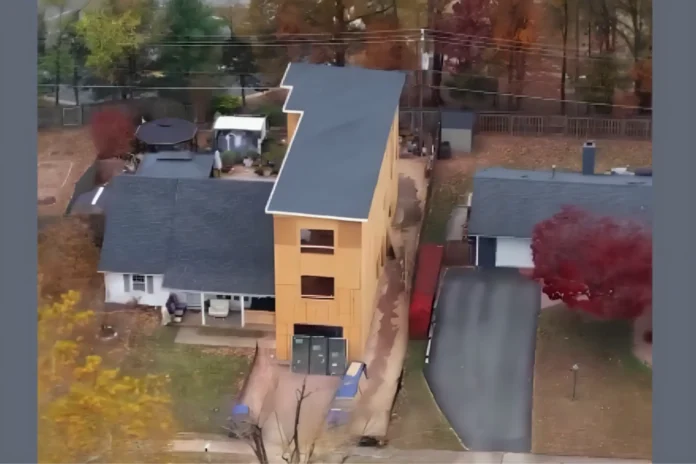
Construction on a sprawling three-story house addition came to an abrupt halt this week in a normally quiet Fairfax County neighborhood, leaving a family in limbo and neighbors divided. While the project-to bring three generations under one roof-pitched in under the county’s rules governing building height, it fell short with regard to spacing from a neighbor’s property line. Complaints prompted Fairfax County inspectors to halt work on the addition, which has highlighted the thin line between personal dreams and community harmony.
The original 1960s house now sports a towering extension that stretches the full length of the lot. County staff confirmed the halt stems from a setback violation the required distance structures must keep from property boundaries. Here, the addition sits just eight and a half feet from the adjacent line, too close under local zoning rules. While height limits were met, setbacks ensure space for light, air, and neighbor privacy. Enforcement often kicks in after tips like these, not upfront checks alone.
A tweet from X.
Courtney Leonard lives right next door, and she first spotted the changes one morning and can’t believe her eyes.
“What the hell, what the hellies, what the hell, what the hell, what the hellie, what the hellies, what the hellie auntie, what the hellie hoe, what the hellie berry, what the hellie brian, what the hellie brian james,”
She exclaims in an interview with Fox 5 DC, words spilling out in raw frustration. It feels like it’s not real. When you see it, I mean you’ve seen it, so yeah, it’s shocking.
The problem for Leonard extends far beyond measurements. The addition is an imposing presence in her yard, shading out sunlight and clashing with the low-slung homes surrounding it.
“It seems to me that when you put something like this up, you want to talk to your neighbors about it,”
She told reporters.
“Design wise, it doesn’t look anything like what it’s attached to or anything else in the neighborhood.”
Her concerns echo a wider unease. Without a homeowners association HOA in this subdivision, there’s no local group to review designs or enforce style guidelines. All control falls to county zoning, which focuses on basics like height and setbacks, not curb appeal. Leonard’s complaint, filed formally, sparked the inspection that halted work on November 13, 2025, as reported by Fox 5 DC.
Not everyone sees it as a problem. Some neighbors rallied behind the family, calling the multigenerational setup a smart, heartfelt choice.
“Other neighbors tell us they’re okay with this, that three generations of a very nice family will be living here,”
Fox 5 DC noted in coverage. They point out the addition honors family ties in a region where housing costs bite hard.
The homeowners, whose names haven’t been released publicly, shared little with media outlets. They told Fox 5 DC they had nothing to add to the story. Still, records show the project aimed to blend lives across generations parents, kids, and elders sharing space amid rising caregiving demands and home prices.
This isn’t unusual. U.S. Census data shows multigenerational households jumped 27% from 2007 to 2019, with more growth post-pandemic, per Pew Research Center analysis. In suburbs like Fairfax, where lots are tight, additions like this offer a practical fix. But they can stir tension when scale surprises those nearby.
Fairfax County zoning acts like a referee for growth. Height rules cap how tall buildings can go to keep skylines in check, but setbacks think buffer zones prevent crowding.
“According to the zoning laws, they are well within their rights and there’s really nothing I can do about it,”
One neighbor lamented to Fox 5 DC, capturing the frustration.
Inspectors from the Department of Code Compliance stepped in after Leonard’s report. They verified the height complied but flagged the side-yard setback breach.
“In the meantime, late today, we heard from Fairfax County staff that while this addition does fall within the zoning guidelines for height, as built, it’s too close to Courtney’s property line and so construction has been paused,”
Fox 5 DC reported.
Supervisor Pat Herrity, representing the area, sees a teachable moment.
“A structure like that, eight and a half feet from the property line, three, three stories tall for the length of the lot. It has no place, and we need to fix our zoning ordinance to make sure that doesn’t happen again,”
He said. Herrity plans to pitch updates at the Board of Supervisors meeting next Tuesday, November 25, 2025. The tweaks could tighten side-yard rules in residential zones, balancing property rights with neighborhood feel.
This case illustrates how local zoning ordinances play a role in suburban developments. Complaint-driven enforcement means there are no routine inspections or resources to catch every little detail. Fairfax’s ordinance, available at encodeplus.fairfaxcounty.gov, outlines these standards, but the practical application is often hotly debated.
