A social media controversy involving AI-generated imagery is drawing scrutiny across the creator economy, after influencer Lauren Blake Boultier admitted to posting a manipulated image that placed her face onto the body of model Tatiana Elizabeth — a move that has sparked debate over consent, authorship and the limits of automation in content creation.
The now-deleted post, shared in late March, appeared to show Boultier attending the Miami Open. But users quickly identified inconsistencies, tracing the image back to a real photo Elizabeth posted in September 2024 while attending the U.S. Open at Arthur Ashe Stadium. In the original image, Elizabeth is seen courtside in a green-and-white tennis-inspired outfit — a look that was replicated exactly in Boultier’s altered version, down to the pose, accessories and even a visible wrist tattoo.
The only difference: Boultier’s face had been digitally superimposed over Elizabeth’s body.
Elizabeth publicly addressed the situation on TikTok and Threads, walking followers through side-by-side comparisons of the images and calling out what she described as unauthorized use of her likeness. She emphasized that the original moment — attending the U.S. Open — was a milestone in her career, noting she had been invited to the event by Serena Williams.
“That was something I worked for,” Elizabeth said in a video. “And to see it recreated without permission — that’s where the issue is.”
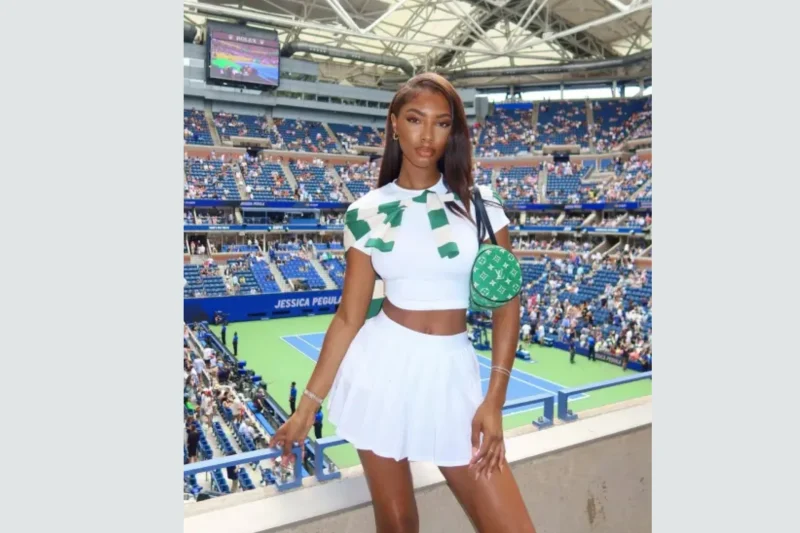
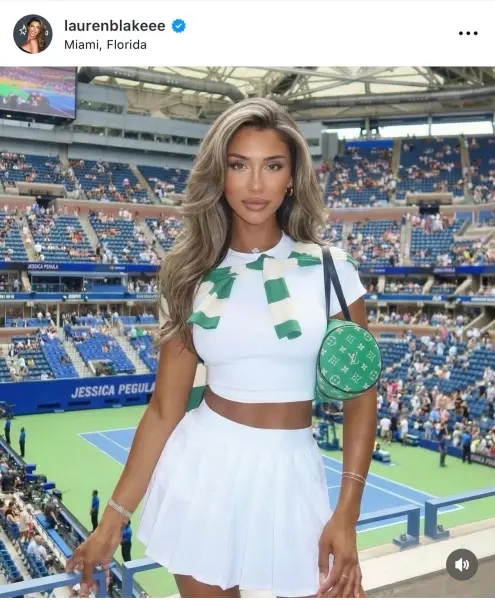
photo credit: laurenblakeee / Instagram
Boultier responded on April 1 via Instagram and in an interview with TMZ, attributing the post to a third-party AI content agency used by her team to produce images at scale. She said she was unaware the generated content had been based on an existing photo.
“I take full responsibility for what appears on my platforms,” Boultier wrote, confirming the image had been removed and that she had privately reached out to Elizabeth with an apology. She added that the post was “entirely inconsistent” with her values and pledged to implement stricter oversight of her content pipeline.
Despite the apology, Elizabeth has remained firm in rejecting it. In follow-up posts and interviews, she described Boultier’s response as “scripted” and lacking authenticity, arguing that referencing AI and third-party teams deflects from personal accountability.
“I don’t think it’s coming from a sincere place,” Elizabeth said, adding that the explanation felt more like an attempt to move past the backlash than to fully acknowledge the harm caused.
Elizabeth also raised broader concerns about how easily AI tools can replicate real people’s images without consent — a dynamic she says disproportionately impacts Black creators. While condemning harassment directed at Boultier, she maintained that public criticism is a natural consequence of the situation.
The incident has since fueled wider industry conversations about the growing use of AI in influencer content. As image-generation tools become more advanced, creators and audiences alike are grappling with blurred boundaries between inspiration, editing and outright replication.
Critics argue the case highlights a lack of safeguards in AI-assisted workflows, particularly when real images are used as source material without attribution. Others view it as a cautionary example of over-reliance on outsourced content systems in a fast-moving digital landscape.
The controversy also underscores a rising trend of “virtual influencer”-style content, where altered or entirely fabricated personas are layered onto real-world imagery — often without clear disclosure. While the technology offers new creative possibilities, it is increasingly raising ethical questions around ownership, identity and authenticity.