

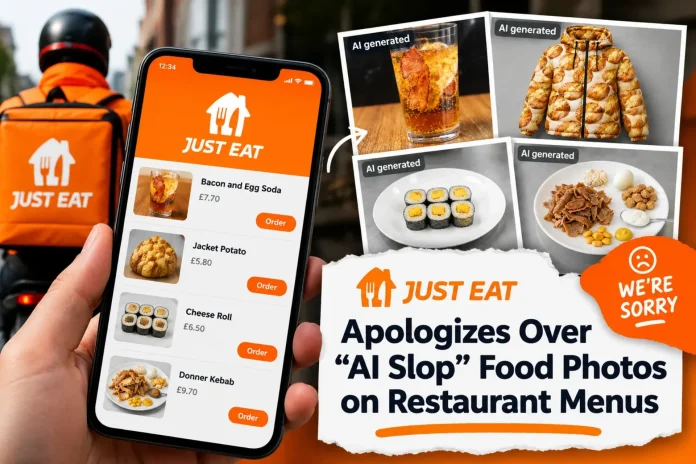
Just Eat is in damage-control mode after its experiment with AI-generated menu photos produced some of the most unhinged food images the internet has seen in a while.
The UK delivery app had been quietly testing the feature on independent restaurants that didn’t have their own pictures. The idea was straightforward enough: photos help sell food, and a lot of smaller spots can’t afford professional shoots. Just Eat already pays for photography for some of its partners, so the AI tool was meant as a faster, cheaper fill-in. Every generated image carried an “AI generated” label, and restaurants could opt out.
It did not go well.
Customers started spotting the results in mid-October and immediately started posting them. A Northern Ireland cafe’s “bacon and egg soda” — a breakfast sandwich on soda bread — showed up as bacon, sausages, and a fried egg floating in a glass of cola. One person called it “the actual worst thing I’ve ever seen.” A Manchester “chip muffin,” which is just a chip butty, became muffins with fries baked into them. “Cheese roll” turned into sushi. A misspelled “garlic bread plane” became garlic bread shaped like an airplane. “Jacket potato” produced a puffer jacket covered in potato prints. Salt and pepper chips, the Chinese takeaway classic with onions and chillies, appeared as plain fries drowned in seasoning.
Irish menus fared no better. A batter burger showed up between deep-fried buns. Smoked cod arrived looking like a raw fillet dusted with flour. Scampi became sushi. A doner kebab listing rendered as a plate of separate ingredients. There were smaller misses too: a burger sauce that contained a tiny burger, wine with watermelon chunks floating in it, and cheddar that looked like fondue.
The screenshots spread fast across Reddit, X, and Instagram. Some people treated it as pure comedy. Others were less amused. Multiple users said they just wanted to see the actual food they’d be getting, not an AI guess. One commenter dryly noted that the images “just helped my diet.”
Just Eat responded with a statement that hit the usual notes. The company said it wants photos that accurately reflect what customers will receive, noted that it already works with tens of thousands of small restaurants and funds professional photography for some, and then offered the apology: “We’ve been trialling AI-enhanced images and as with any new technology, it isn’t always quite right the first time. We’re sorry for any inaccurate images that have been posted. We’re in the process of removing them and have paused rolling this out while we further develop the tool to ensure it best serves our partners and customers.”
They’re not killing the idea. They’re just hitting pause while they try to make the tool less chaotic. For now, the worst of the images are being pulled, and the trial is on hold.
The whole episode is a pretty clean example of what happens when generative AI meets real-world language that doesn’t match the training data. Regional menu terms and casual spellings broke it immediately, and the results were strange enough that people felt compelled to share them. Just Eat now has to decide whether the cost savings are worth the risk of serving customers pictures of food that doesn’t actually exist.

