

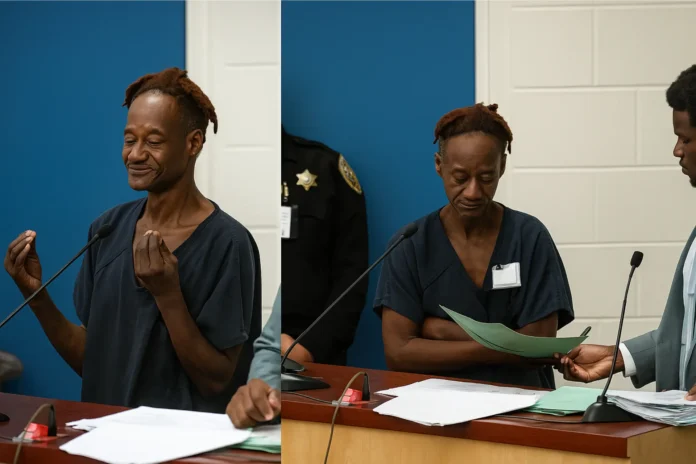
In a Florida courtroom on Tuesday, one woman’s quiet desperation exposed the raw truth that jail feels like the last refuge from the streets for some.
The scene unfolded during a routine initial appearance for possession of drug paraphernalia, a minor charge that could have ended quickly with a plea deal. Instead, the defendant, a homeless woman in her forties with tired eyes and a worn jacket, interrupted the proceedings. She asked the judge for 60 more days behind bars, then bargained down to 30, explaining she needed time to scrape together cash for a temporary room. Her voice trembled as she added that even one more night would help, but the streets waited outside those walls.
The judge, a seasoned figure in a navy robe behind the wooden bench, paused and offered a workaround: no immediate resolution, a $500 bond, and straightforward advice not to post it if release meant nowhere to go. A public defender stepped in to guide her next moves, and the hearing wrapped with a simple good luck that hung heavy in the air. That exchange, captured on video and shared widely online, has already drawn thousands of views and shares, pulling hearts toward a story that’s equal parts heartbreak and headline.
This moment lands amid Florida’s ongoing struggle with homelessness, where recent counts show about 28,000 people without stable housing statewide this year. Numbers dipped slightly from last year, but experts point to rising rents and stagnant wages as culprits keeping folks trapped in cycles like this one. I’ve reported on enough survival tales to know these pleas aren’t outliers; they echo across the U.S., from urban benches to rural lots, where low-level arrests become reluctant lifelines because shelters overflow and support lines stretch thin.
What strikes me most here is the quiet dignity in her ask, a reminder that freedom without basics like a bed or a meal rings hollow. It’s a call to rethink how we handle vulnerability, shifting from punishment to bridges like expanded rapid rehousing programs that get people indoors fast.
Florida offers pathways forward, including outreach through local continuums of care that link folks to emergency beds and case workers. Nationally, dialing 211 connects callers to immediate shelter options tailored by zip code, while groups tracking trends release annual insights to push for more innovative policies. And for deeper dives into ending this crisis, resources like the 2025 State of Homelessness report lay out data-driven steps communities can take.
