

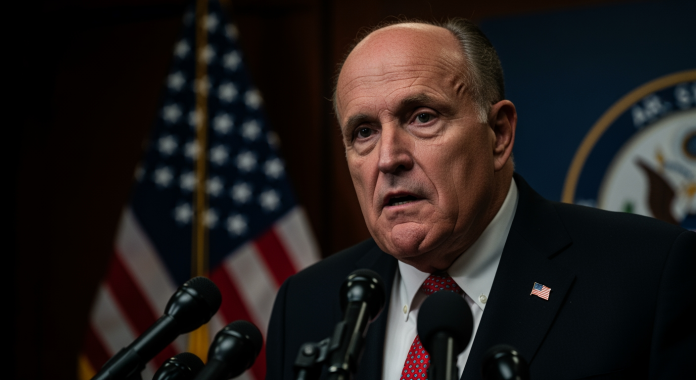
“The vote as it presently exists is FALSE. It’s FRAUDULENT.” These words, spoken by Rudy Giuliani after the 2020 presidential election, continue to resonate in American politics. A recent post on X from user @NanLee1124 highlighted a resurgence of these claims, reigniting debates about election integrity and the lingering effects of that election cycle.
Giuliani’s initial election fraud claims, made in the aftermath of the 2020 election, focused on allegations of widespread voter fraud. He and his legal team presented various arguments, including claims of ballot stuffing, vote counting irregularities, and alleged manipulation of voting machines. These arguments spread through media appearances and legal challenges, contributing to a period of heightened political tension and distrust in the electoral process. Courts and election officials largely debunked these claims, yet they gained traction among certain segments of the population.
The legal and political fallout from these claims was substantial. Many lawsuits were filed but largely dismissed due to a lack of evidence. Giuliani himself faced disciplinary proceedings. The impact on public opinion was significant, contributing to a decline in trust in elections and fueling the January 6th Capitol attack.
🚨RUDY WAS RIGHT. @RudyGiuliani, 2020: “The vote as it presently exists is FALSE. It’s FRAUDULENT. If they certify it, they are certifying a false statement to the United States of America. When I was a prosecutor, that was a FEDERAL CRIME.” 🔥
— NanLee Marie Carissimi (@NanLee1124) December 22, 2025
This erosion of trust continues to influence voter behavior and policy discussions on election security.
The recent resurgence of these claims, sparked by the @NanLee1124 tweet sharing 2020 statements, points to a renewed interest in revisiting the election’s events. This renewed focus stems from factors like ongoing investigations, political strategies, and the continued circulation of conspiracy theories. The persistence of such narratives underscores the difficulty of combating misinformation and their lasting effect on public perception. Some actively seek to reframe the narrative, using “stolen election” claims to rally support and question current political processes.
The debate over election integrity has grown highly polarized. Democrats often emphasize secure and accessible voting, while Republicans frequently focus on preventing voter fraud. These differing viewpoints highlight fundamental disagreements about the electoral process and how to ensure fairness.
Narratives are often contradictory and arguments increasingly divisive, complicating efforts to find common ground. Legal scholars and election officials are actively trying to clarify specifics, yet significant divides remain.
Legal scholars and election officials are actively scrutinizing the definition of a ‘federal crime’ concerning these claims. Central to this examination are questions of intent, the burden of proof, and legal standards for prosecuting election-related offenses. An ongoing process aims to determine if federal laws were violated.
Expert analysis suggests that proving voter fraud in court is challenging, requiring direct evidence of intentional wrongdoing and clear impact on election outcomes. This is further complicated by the interpretative nature of what constitutes a ‘federal crime,’ often relying on legal precedent.
The echoes of 2020 and Rudy Giuliani’s resurfaced accusations stand as a stark reminder of unsubstantiated claims’ lasting impact on U.S. democracy. This current resurgence emphasizes the importance of critical thinking, media literacy, and robust fact-checking amid widespread misinformation. The long-term consequences of these claims on public trust and the electoral process will continue to shape American politics. Protecting the electoral process remains paramount.
