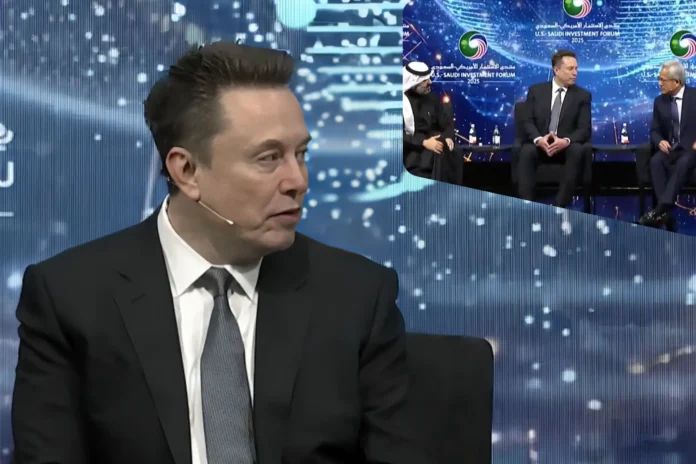
Imagine a world where nobody ever has to work again to survive, where poverty is wiped out completely, and the only reason anyone clocks in is because they genuinely love what they do. That is the future Elon Musk described Wednesday at the U.S.-Saudi Investment Forum in Washington, D.C., and he insists it is closer than most people think. Speaking alongside Nvidia CEO Jensen Huang, Musk declared that artificial intelligence, paired with humanoid robots, will create such an overwhelming abundance that money itself will eventually become irrelevant.
During the panel, Musk laid out his core conviction with absolute clarity. He said there is literally only one realistic way to make everyone on Earth truly prosperous: massive deployment of AI-powered humanoid robots that handle almost all physical labor. Work will shift from necessity to choice, something people do for personal fulfillment the same way they now play sports or tend gardens. He called humanoid robots the biggest product in history, far surpassing smartphones in economic impact, and predicted that Tesla would pioneer the field, with many other companies following.
Musk also delivered a direct warning on stage. The utopian outcome he described is probable, he said, but only if AI is built to care deeply about truth and beauty. Without that alignment, the same technology could exacerbate inequality or even worsen it. Hours later, he expanded on this in a post on X that already has nearly twenty million views, writing that people will enjoy superhuman medical care and entertainment so engaging it dwarfs anything available today, making everyone “far wealthier than the richest person on Earth.” He later added that while absolute poverty can be eliminated, human envy is eternal, showing he is aware that the transition will not be spiritually painless for everyone.
The Tesla CEO is not just talking about this future — he is building it at breakneck speed. Tesla’s Optimus humanoid robot is already walking smoothly, folding laundry, sorting objects, and demonstrating new levels of dexterity. Limited factory deployment is set to begin next year, with higher-volume production expected in 2026. The company is finalizing the AI5 inference chip, which Musk says will deliver massive leaps in performance at significantly lower power, a critical feature for robots that need to operate all day on a single charge. Meanwhile, xAI is training Grok models with a relentless focus on truth-seeking and has just announced a significant new data center partnership in Saudi Arabia, powered by Nvidia hardware.
Musk’s exchanges with others this week underline how seriously he takes the timeline. He agreed with analysts who view poverty as an engineering problem, praised Tesla’s capital-efficient approach to AI training, and revealed that he spends many Saturdays personally reviewing chip designs. When one follower posted about Optimus potentially solving labor shortages, Musk replied that the robot would be great for countries like Japan, which are facing demographic decline. Every comment reinforces the same message: the technology is moving faster than society expects.
Ultimately, the machines themselves will not determine our fate. It is humanity that still holds the steering wheel, and we alone will decide whether AI and robotics become the most incredible blessing our species has ever received or a curse that concentrates power in fewer hands than ever before. The choice is ours, the tools are almost ready, and the clock is ticking louder than most people realize.