

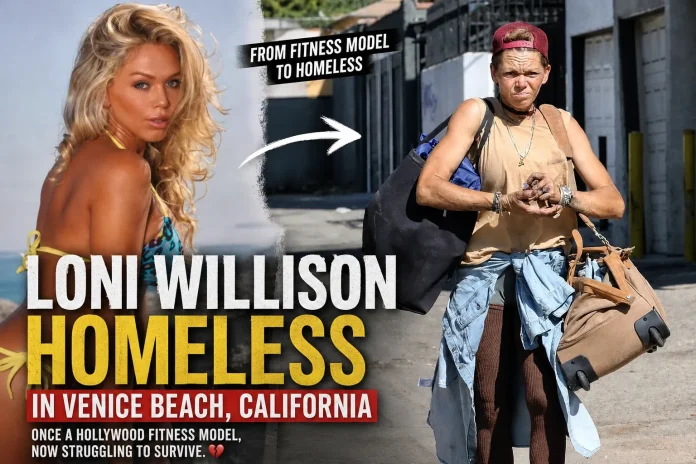
Once a successful fitness model with a promising career, Loni Willison, 42, remains homeless on the streets of Los Angeles, primarily in the Venice Beach area, as of 2026. Recent sightings show her pushing a shopping cart filled with belongings, rummaging through trash for food and clothing, and displaying visible signs of prolonged hardship, including significant weight loss, dental issues, and injuries.
Willison rose to prominence in the 2000s and early 2010s as a fitness model, appearing in magazines such as Iron Man, Glam Fit, and Flavor. Known for her athletic physique and work in swimsuit and sportswear campaigns, she also worked as an assistant to a plastic surgeon and reportedly had a net worth of around $1.6 million at her peak.

Her life took a dramatic turn following her marriage to Baywatch actor Jeremy Jackson in 2012. The couple had a beach wedding in California, but the relationship ended in a contentious divorce in 2014. Willison alleged domestic abuse during the marriage, including claims of physical violence that resulted in injuries such as broken ribs and neck trauma. Jackson has denied the allegations. Both reportedly struggled with substance issues amid heated arguments.

Following the split, Willison suffered a severe mental breakdown. She later described experiencing delusions, including sensations of being “electrocuted” or tortured in her home. These struggles led to the loss of her job, apartment, and car. By around 2016–2018, she had become homeless and turned to crystal meth and other substances, which further deteriorated her physical and mental health.
Public photographs from that period onward captured her searching dumpsters for necessities. Willison has described street life in survivalist terms and has taken measures such as avoiding showers, cutting her own hair, and wearing layered, tattered clothing in an attempt to deter potential attacks. She has been robbed and assaulted while living on the streets.
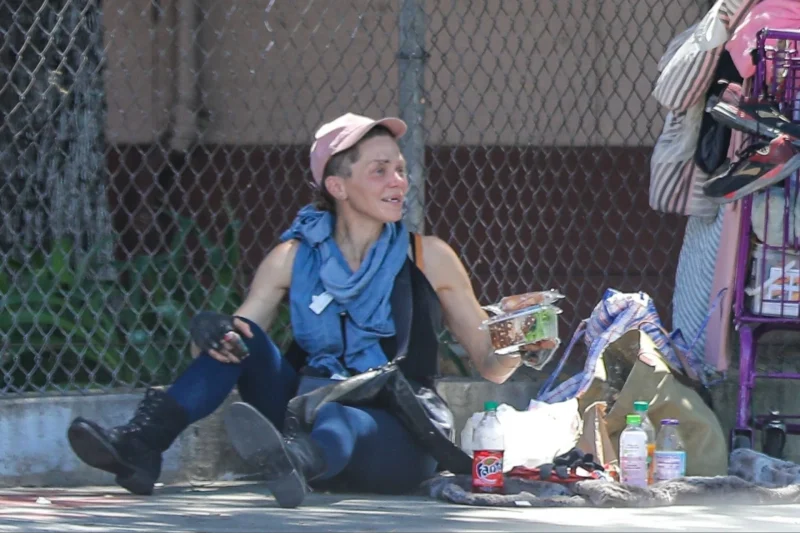
Now in her early 40s, Willison is frequently seen in Venice Beach and nearby areas carrying trash bags and scavenged items, smoking, drinking large sodas, and occasionally showing signs of substance use, including huffing from aerosol cans. Photos from 2025 and into April 2026 depict her with a frail frame, damaged hair, missing or rotted teeth, and recent injuries such as a swollen eye.
Despite multiple offers of assistance from family, friends, and reportedly her ex-husband—including hotel stays, meals, clothing, and rehab—Willison has repeatedly declined help. She has told people she is “doing just fine,” prefers not to reconnect with her past, and feels safer on the streets. Jackson has publicly expressed sorrow, stating he tried to support her with therapy and medication but ultimately felt the woman he once knew was “gone” due to her mental health and addiction challenges.
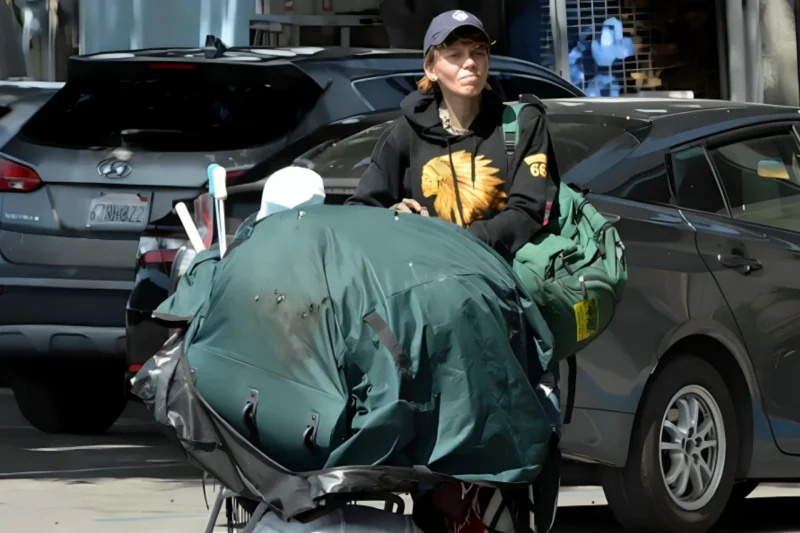
Willison’s story is frequently cited in discussions about the intersection of trauma, mental health, addiction, and homelessness in California. Experts and observers point to a combination of factors: the alleged trauma from her marriage, untreated mental health issues including paranoia and delusions, escalating drug use, and the loss of her support network and financial stability.
Her case illustrates the difficulties of addressing “dual diagnosis” situations involving both mental illness and addiction, particularly when individuals decline intervention. While some online reactions express shock and sadness at her fall from a fit, successful model to street homelessness, others call for greater compassion and systemic solutions. However, without her willingness to accept help, recovery remains uncertain.
As of 2026, Loni Willison continues her life on the streets with little apparent change, serving as a poignant and ongoing reminder of how quickly circumstances can unravel and the complex barriers to rebuilding.

