

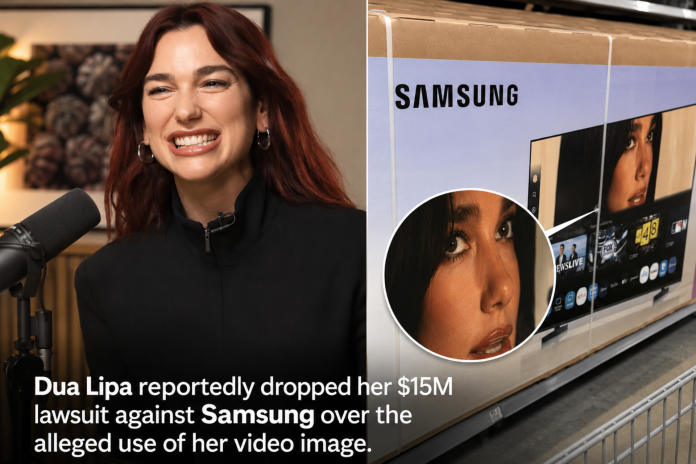
Dua Lipa has not dropped her $15 million lawsuit against Samsung, despite swirling social media rumors of a swift personal resolution involving company chairman Lee Jae-yong.
Reports circulating on platforms like X claim the Grammy-winning artist accepted a $5 million settlement plus a brand ambassador role after a direct call from the Samsung leader, who framed the image use as a misunderstanding. One viral post even attributes a casual “oh why not” response to Lipa. Court records and official statements from both parties show no such development as of May 13, 2026. The case, filed in the U.S. District Court for the Central District of California, remains active with no docket entries indicating dismissal or settlement.
The lawsuit stems from Samsung’s use of a copyrighted backstage photo of Lipa from her 2024 Austin City Limits Festival performance. The image appeared on cardboard packaging for Crystal UHD TVs sold nationwide throughout 2025. Lipa’s team alleges the placement created a false impression of her endorsement, driving sales while violating her copyright, trademark rights, and right of publicity under California law. She first learned of the usage around June 2025 through fan reports and social media. After sending a cease-and-desist letter, her representatives described Samsung’s reply as dismissive, prompting the federal filing earlier this month.
Samsung maintains it received explicit assurances from a third-party content partner that all permissions were secured before incorporating the image, which was tied to its TV Plus streaming service. The company has denied intentional misuse and says it suspended the disputed packaging after Lipa raised concerns. Legal observers note that right-of-publicity cases in California often carry strong weight for high-profile plaintiffs, particularly when paired with widespread commercial distribution and claims of false endorsement.
This dispute reflects broader tensions in the entertainment and tech industries over image rights and licensing in an era of rapid content sharing. Artists like Dua Lipa, who have built substantial personal brands through music and fashion collaborations, increasingly treat unauthorized commercial uses as serious threats to their control and earning power. For Samsung, a leader in consumer electronics that relies on compelling visuals to market premium products, the episode highlights the vulnerabilities of depending on partner-sourced materials without exhaustive verification.
While many similar high-profile cases resolve through confidential negotiations to avoid prolonged litigation and public scrutiny, any genuine settlement would require formal court documentation. Consumers who purchased affected TVs last year may have seen the original packaging in major retail outlets. For the most current information, review filings directly through the U.S. District Court or resources like Court Listener.
The rumor mill around celebrity legal battles often outpaces verified facts, turning unconfirmed details into viral entertainment. In this instance, the absence of confirmation from Lipa’s representatives or Samsung underscores the need for caution before treating social media claims as resolved outcomes. Lipa’s approach so far demonstrates a firm stance on protecting her likeness, consistent with how many performers now navigate corporate partnerships in the digital retail landscape.

