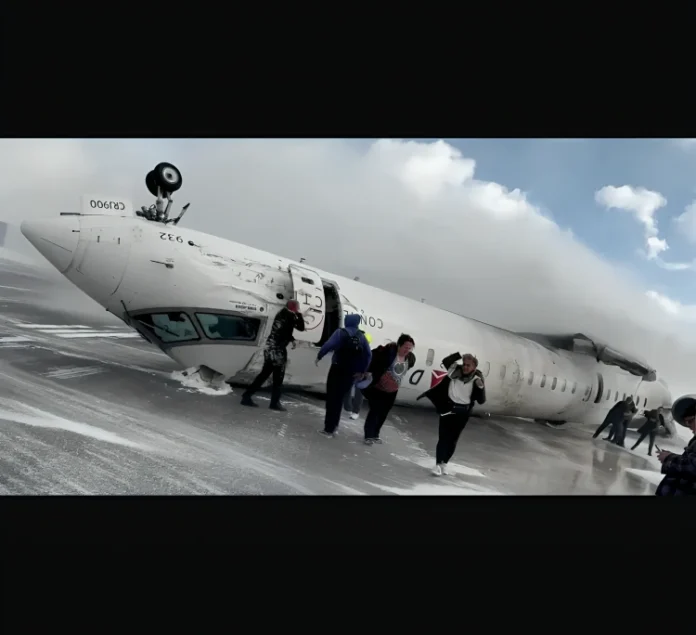
Delta Flight 4819 crash-landed on Toronto Pearson International Airport in a frightening accident in which all 80 passengers and crew members narrowly survived. The Bombardier CRJ-900 plane, having departed from Minneapolis, skidded on a slippery runway, overturned, and burned on impact. Despite no fatalities, there were 21 injured who went to the hospital with a variety of severity in their injuries.
The dramatic landing, coupled with the timely reaction of the emergency responders, saw every passenger on board safely rescued. Investigations on the crash are ongoing with the authorities seeking to uncover the real reasons behind the near-miss accident.
Severe winter conditions in Toronto provided a major cause of the accident with icy runways and a thick fall of snow making landing risky. The plane skidded on landing and overturned. Passengers described scenes within the plane in disarray with luggage everywhere, oxygen masks falling down and fuel spilling within.
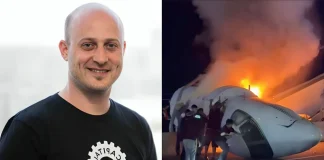
One survivor, Nate Ritchie, recounted the traumatic episode: “My life was over. I was hanging upside down, there was jet fuel dripping down the windows, and I could hear screaming.” The others and Ritchie narrowly escaped seconds ahead of a blast near the exit door.
Emergency responders quickly arrived at the scene, removing passengers and crew from the airplane as smoke and fire spread.
In the aftermath of the crash, Delta Airlines provided a compensation offer of $30,000 to each passenger but emphasized the payment is “with no strings attached.” The offer is taken to mean survivors are still free to seek legal recourse. However, many passengers are not satisfied with the compensation. One such passenger who was drenched in jet fuel in the accident, Marthinus Lourens, is filing a suit against Delta and Endeavor Air and is claiming a compensation of $200,000 for the emotional and physical damage inflicted on him. “Thirty thousand dollars is not even close to what we went through,” said Lourens.
Richie joined them, alleging the crash gave him insomnia and a permanent fear of flying. He has hired lawyer Ardalan Montazer and is driving back to Florida rather than flying. A number of survivors have also been undergoing therapy to try to treat symptoms of post-traumatic stress disorder (PTSD) caused by the harrowing crash.
The Transportation Safety Board of Canada and the U.S. National Transportation Safety Board are jointly investigating the crash. Experts are considering a wide list of potential possibilities such as weather, what the pilots flew and how, and how the plane was performing.
A post from X.
One alarming detail is the inexperience of copilot Kendal Swanson, who had fewer than 1,500 flight hours and was trained only a year previously. It is said she would have been in command on landing. It has fueled debates within the entire North American flight business on shortages in pilots and dangers with accelerated training in North America.
For numerous travelers, making it through the accident was only the start of their tribulation. Richie, having experienced head and neck injuries, has spoken openly about the intense emotional pain he is still living with. “It’s all too much. I need time to make sense of what occurred,” he said, describing that he has contacted a therapist for help.