

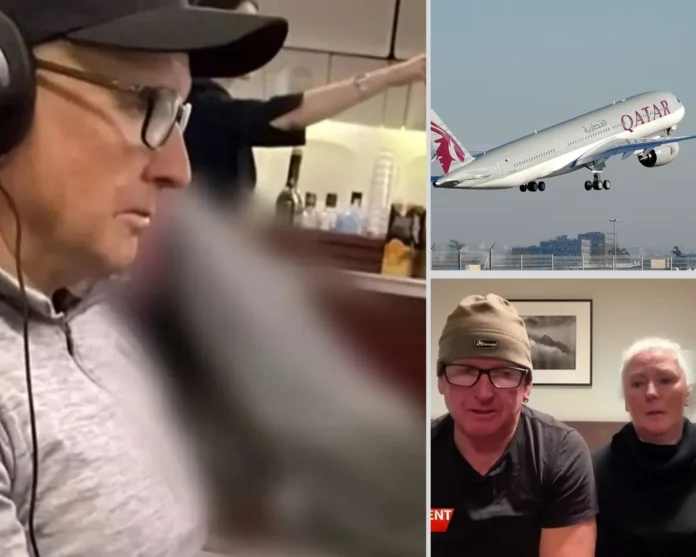
An unforgettable flight turned into a nightmare for an Australian couple after a tragic incident left them sitting next to a deceased passenger for four long hours.
It was supposed to be a routine journey. Mitchell Ring and Jennifer Colin, an Australian couple, boarded Qatar Airways flight QR905 from Melbourne to Doha, excited for their trip. But what unfolded mid-air left them shaken and deeply disturbed.
About ten hours into the 14-hour flight, a woman suddenly collapsed after coming out of the restroom. Flight attendants rushed to help, performing CPR and trying everything they could to revive her. Sadly, their efforts were in vain. The woman was declared dead right there on the plane.
What happened next made the situation even more distressing for Mitchell and Jennifer. The crew, following airline procedures, placed the woman’s body in an empty seat—right next to the couple. Covered in blankets, the deceased passenger remained there for the remaining four hours of the journey.
Jennifer recalled the ordeal as “traumatic” and “heartbreaking.” She managed to find an empty seat across the aisle. However, Mitchell wasn’t given the option to move, leaving him sitting right beside the deceased woman.
“It was one of the most difficult things I’ve ever experienced, We just felt trapped and helpless.”
He shared.
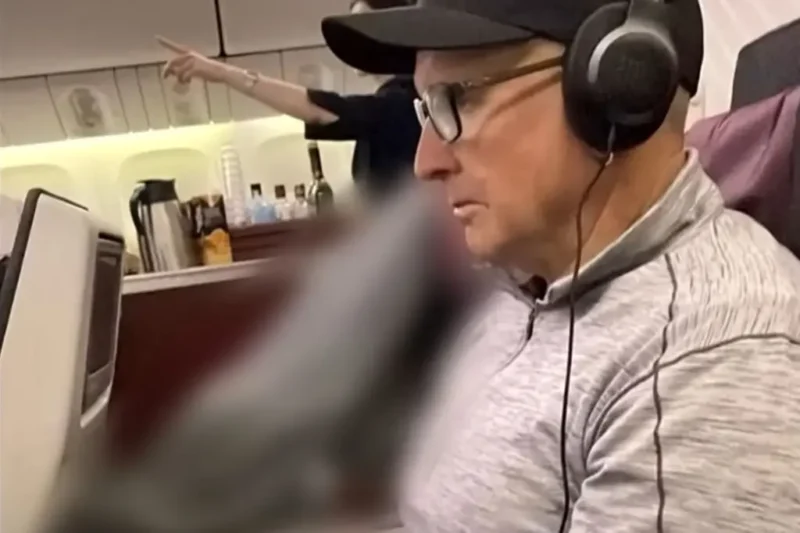
Despite there being other vacant seats nearby, the airline did not relocate Mitchell. The couple expressed frustration over the lack of support.
“The airline has a duty of care towards its passengers, We didn’t expect something like this to happen, but when it did, we hoped they would handle it better.”
Mitchell said.
Qatar Airways later issued an apology, expressing condolences to the deceased passenger’s family. In their statement, the airline said,
“We extend our heartfelt sympathies to the family of the passenger who passed away. We regret any distress caused to other passengers onboard. Our team is reaching out to those affected, as per our policies.”
The airline explained that its actions followed safety guidelines from the International Air Transport Association (IATA). These guidelines recommend placing a deceased passenger in a seat with fewer nearby passengers or using a body bag if available. However, in this case, Mitchell and Jennifer felt that more could have been done to ease their discomfort.

Jennifer shared how the experience dampened their holiday spirit.
“We were looking forward to our trip, but after that flight, it was hard to enjoy anything. We couldn’t stop thinking about what had happened.”
What troubled the couple even more was the lack of follow-up from both Qatar Airways and Qantas, through which they had booked their tickets.
“No one reached out to check on us or see how we were doing, It felt like we were left to deal with the trauma on our own.”
Mitchell said.
This incident raises important questions about how airlines handle such tragic situations. While safety guidelines provide a general framework, the human side of such emergencies—the emotional well-being of passengers—seems to be overlooked.
Passengers understand that emergencies can happen. However, when they do, there’s a need for empathy and better support. Simple gestures, like offering alternative seating or providing counseling after the flight, could make a huge difference.
For Mitchell and Jennifer, the flight is now a memory they wish they could forget.
“We hope airlines learn from this and have better plans in place, No one should have to go through what we did.”
Jennifer said.
While it continues to keep people everywhere in touch, airlines should not ever forget it is not all about getting people from point A to point B. It is about keeping them secure, healthy, and in a healthy psychological place too, when accidents happen.
We must remind ourselves of this tragic incident: compassion matters, even at 30,000 feet.
