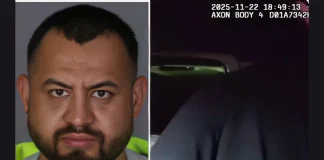
A father’s desperate dash from a grocery store parking lot became a harrowing escape when federal agents allegedly blasted pepper spray through his car’s open window, leaving his infant daughter gasping for breath in the back seat.
Rafael Veraza, a 25-year-old resident of nearby Berwyn, had pulled into the Sam’s Club lot in Cicero with his wife, their one-year-old daughter Ariana, and his teenage sister for what promised to be an ordinary Saturday morning shopping trip. Around 9:30 a.m. on November 8, the air filled with the whir of helicopters and blare of sirens from a nearby federal sweep in Chicago’s Little Village neighborhood. Sensing danger, the family ditched their cart full of diapers and milk and hurried back to their gray Toyota Corolla, windows cracked open to catch a breeze.
As they inched toward the exit amid a stream of anxious drivers, a masked agent in a black pickup truck veered close in the opposite lane. Witnesses and video footage captured a quick burst of orange mist shooting straight into the passenger’s side window, coating Veraza in the face as he gripped the wheel. The spray wafted rearward, hitting his wife and sister with burning coughs while Ariana, strapped into her car seat, began wailing uncontrollably, her tiny eyes swelling shut from the sting. Veraza yanked the car to the curb, blinded and choking, as his wife cradled the child and dialed for help.
The family rushed to Gottlieb Memorial Hospital in Melrose Park, where doctors treated them for chemical exposure, including respiratory irritation and severe eye inflammation. Ariana, a U.S. citizen born in Illinois, spent hours under observation as nurses flushed her eyes and monitored her breathing, her gasps echoing the terror of the moment. Veraza, who battles childhood asthma, later described the scene to supporters as pure panic, his daughter’s cries piercing louder than any siren. By evening’s end, all four were released with prescriptions and a lingering fear that routine errands now carry hidden risks.
On November 9, the Verazas stepped into the spotlight at a community center, flanked by local leaders and advocates, as they shared their story to demand answers. Video from inside the car, shaky but unmistakable, shows the mist invading the cabin and Arianna’s frantic squirms in her mother’s arms. They emphasized their innocence, far from the protests erupting blocks away where federal teams clashed with crowds hurling bricks and attempting vehicle rammings. The father pleaded for protections that keep families like his out of enforcement crosshairs, his voice steady despite the raw emotion.
Federal officials maintain the parking lot stayed calm during the Operation Midway Blitz, a months-long push targeting individuals with criminal records in the Chicago area. Department of Homeland Security spokespeople insist no irritants were deployed there, pinning any haze on spillover from broader disturbances that included gunfire aimed at agents and nine arrests for assaults. Yet they acknowledge using such tools elsewhere that day to shield officers from thrown objects, underscoring the operation’s high stakes in a region long resistant to federal overreach. This denial contradicts the family’s footage and hospital records, fueling calls for independent investigations into the agent’s conduct.
In the quiet aftermath, this episode lays bare the human fractures in America’s immigration tug of war, where sanctuary policies collide with vows to prioritize public safety. Families in Cicero and Little Village, home to vibrant Latino communities, now second-guess every outing, their trust in law enforcement frayed by blurred lines between targets and bystanders. As a reporter who’s covered these tensions for years, I see echoes of past raids that scarred neighborhoods without curbing root causes like outdated visa systems, a point echoed in ongoing reform debates at this congressional resource. True progress demands tactics that distinguish threats from toddlers, lest operations like Midway Blitz erode the very communities they aim to secure.
Protests swelled through the weekend, with neighbors forming watch groups to monitor federal movements and shield vulnerable routes. Lawmakers from Illinois have fired off letters seeking accountability, while immigrant support networks ramp up hotlines for those caught in similar sweeps. For the Verazas, healing means more than medicine; it involves rebuilding a sense of safety in a suburb that feels anything but. As November 11 unfolds, their resolve shines through planned rallies, a reminder that one child’s tears can amplify a chorus for change.