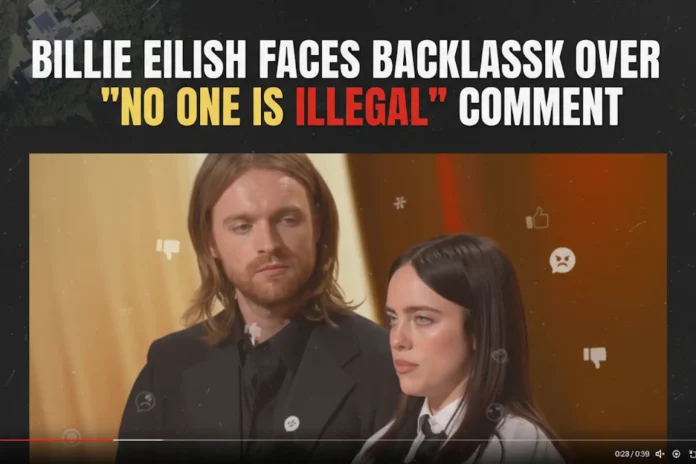
Billie Eilish is facing mounting online pressure from critics to surrender her sprawling Los Angeles mansion to the indigenous Tongva people following her bold Grammy declaration that no one is illegal on stolen land. The 24-year-old singer made the statement while accepting the Song of the Year award for her track Wildflower at the 68th Annual Grammy Awards in Los Angeles. Her words, delivered amid cheers from the audience, quickly ignited a firestorm on social media, where users highlighted the irony of her owning property on land historically tied to the Tongva tribe.
The controversy erupted after Eilish used her acceptance speech to criticize U.S. Immigration and Customs Enforcement, emphasizing immigrant rights in a politically charged moment. She stated plainly that no one is illegal on stolen land, a phrase that resonated with supporters but drew sharp rebukes from conservative voices accusing her of hypocrisy. Critics pointed to her residence in Glendale, a luxurious home she purchased for $2.3 million in 2019, situated in the Los Angeles basin, an area long inhabited by the Tongva before European settlement reshaped the region. This backlash amplified through viral posts, with one prominent tweet garnering nearly two million views and tens of thousands of likes, urging Eilish to either return the land or open her doors to immigrants.
Public records and real estate listings confirm Eilish’s ownership of high-value properties in the area, including an equestrian ranch in Glendale acquired for $2.3 million in 2019, now estimated at a higher market value due to rising Los Angeles prices. The Tongva, also known as the Gabrielino people, have a deep historical connection to the land, with ongoing efforts to reclaim cultural sites and achieve fuller federal recognition for their tribe. While no official statement from the Tongva tribal council has addressed Eilish specifically, the singer’s comments have spotlighted broader conversations about land acknowledgment and restitution in California, where some properties have been voluntarily returned to indigenous groups in recent years. For instance, a multimillion-dollar parcel in Altadena was transferred back to the Tongva in 2022, setting a precedent for private landowners to engage in similar acts of reconciliation.
Social media reactions have been polarized, with conservative users dominating the calls for Eilish to act on her words by relinquishing her mansion or hosting those affected by immigration policies. Comments on platforms like X range from sarcastic invitations to vacation at her home to outright demands for her to lead by example, reflecting a deeper frustration with perceived elite disconnect in Hollywood activism. Supporters, meanwhile, defend her statement as a genuine plea for empathy toward immigrants, arguing that individual property ownership does not negate the validity of acknowledging historical injustices.
This episode underscores a recurring tension in celebrity advocacy, where public figures like Eilish wield immense platforms to challenge systemic issues but often face scrutiny over their personal privileges. In a nation grappling with its colonial past and current border debates, such moments force a reevaluation of how words translate to action, potentially inspiring more tangible commitments from influential voices. Yet, without direct involvement from the Tongva or a response from Eilish herself, the debate risks remaining symbolic, highlighting the challenges of bridging rhetoric and reality in America’s cultural landscape.