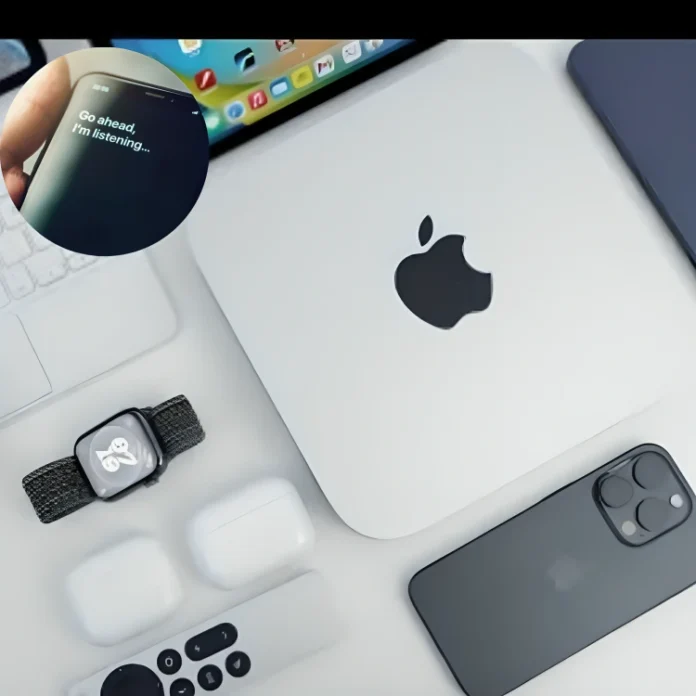
Apple, known for its innovative products and care for user privacy, has just agreed to a major class-action settlement. It will pay $95 million to settle a lawsuit that accused the company’s popular virtual assistant, Siri, of listening in on users without their consent. While Apple has denied the accusations, the settlement raises questions about how convenience in technology balances with privacy, an issue long emphasized by the company.
The lawsuit claimed Siri sometimes recorded conversations without users knowing it, even when the assistant hadn’t been turned on by its usually required “Hey Siri” cue. Some of the recordings, the suit said, were being shared with advertisers, which could then use them to help target ads more precisely. The allegations resonated particularly among Apple loyalists, who had long assumed the company’s approach to privacy was part and parcel of the brand.
Customers involved in the lawsuit claim that Siri, Apple’s voice assistant, recorded their conversations without their knowledge or consent. They accuse the company of breaching their privacy by sharing these recordings with third parties.
The mobile device owners participating in the class action lawsuit argue that Siri could be accidentally triggered, leading to the routine recording of private conversations. These conversations were reportedly shared with third parties, including advertisers, as stated in the lawsuit.
Two plaintiffs reported that mentions of Air Jordan sneakers and Olive Garden restaurants resulted in targeted ads for those products. Another plaintiff claimed to have received ads for a specific surgical treatment after discussing it privately with their doctor, as reported by Reuters.
The class-action suit, Lopez et al v. Apple Inc., was filed in the U.S. District Court for the Northern District of California under case number 19-0457718. It is alleged that iPhones and other devices by Apple-iPads and HomePods-had been listening, even when those conversations were supposedly private. For which, under CEO Tim Cook, positioned itself as one of the premier companies in terms of privacy, these allegations seemed contradictory to its core.
Under the class-action settlement, owners of Siri-enabled devices in the United States used between September 17, 2014, and December 31, 2020, would be eligible for damages. Claims could yield receipts up to $20 per device- a rather paltry figure considering the seriousness of the claims. U.S. District Judge Jeffrey White still needs to approve the settlement after a hearing set for February 14, 2025, in Oakland, California. Meanwhile, attorneys for the class are set to take home up to $29.6 million in legal fees and expenses.
Although $95 million may sound like a lot, it is a drop compared to Apple’s overall financial success. Since 2014, the company has raked in an estimated $705 billion in profits, making this settlement a minor cost by comparison.
Had the case gone to trial and Apple has been found liable, it could have been subject to financial damages of up to $1.5 billion, not to mention the bludgeoning that would have or could have occurred to its public image, which the company surely wanted to avoid.
Apple has denied wrongdoing throughout the lawsuit. The company has stressed its commitment to user privacy, including deleting individual Siri recordings made before October 2019. For Apple, this settlement is an attempt to maintain user trust while putting a legal matter behind it.
This case also emphasizes the increasing pervasiveness of AI virtual assistants in our lives. While these technologies offer a convenient breakthrough, they also raise new concerns concerning privacy. Whether deliberately or otherwise, these allegations against Siri are bringing into light the challenges faced by technology companies in trying to get an appropriate balance.
This lawsuit proved that even favorite brands are fragile for Apple loyalists. As every new device ushers them further into this AI-dominated life, the debate over their data privacy doesn’t seem close to an end anytime soon. It is an end to a legal battle that Apple might breathe a sigh of relief from, but for its user base, it is one more warning of just how complex modern life has become.