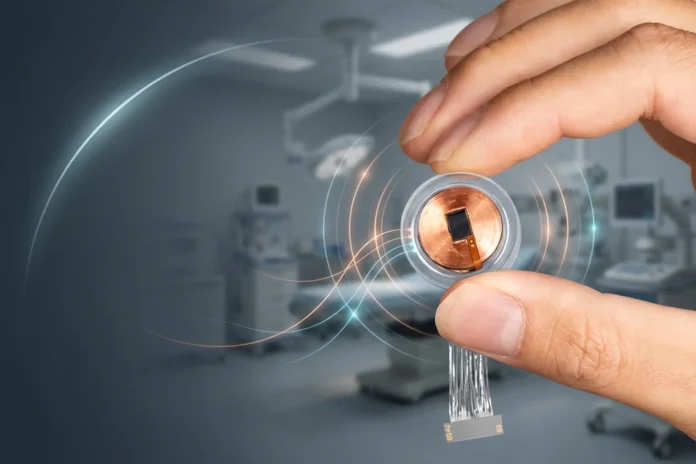
Neuralink has received FDA approval to launch LINK, the first pivotal clinical trial for an implantable brain-computer interface in the United States. The study will test the safety and effectiveness of the company’s N1 implant in people living with severe paralysis caused by ALS, and enrollment is now open.
A pivotal trial is the stage that matters most. Neuralink’s earlier work ran as early feasibility studies, small tests of whether the device could work at all, across the United States, Canada and the United Kingdom, and more than 30 participants have received the implant through them. A pivotal study is the larger, formal test designed to produce the evidence a regulator needs before a device can be approved for the market. Neuralink is explicit about the boundary: approval to run LINK is not approval to sell the implant, which remains investigational and available only inside authorized research.
The system pairs the coin-sized N1 implant, whose fine electrode threads sit in the brain’s motor cortex and are placed by the company’s R1 surgical robot, with software that translates neural signals into commands. The LINK study will evaluate whether participants can control digital devices through thought alone, with a focus on functional outcomes that improve independence in daily life. The company has not disclosed its target enrollment, the study’s duration or its clinical sites, and says access will expand over time through its patient registry.
The trial builds on results that have already redrawn what patients expect. Bradford Smith, the first participant with ALS, has communicated using brain signals alone, and other participants have written and played games with the implant, including a woman who wrote her name by thought for the first time in 20 years and patients who faced off in Counter-Strike 2 and Mario Kart via mind control. Neuralink’s own announcement lays out the study, Engadget explains the pivotal designation, and Gizmodo adds the company’s longer history, including its controversial animal testing past.
For ALS patients, who progressively lose the ability to move and speak, the stakes of LINK are concrete: a tested, approvable path from experimental implants to a device doctors can actually offer. The data, not the announcement, will decide whether Neuralink gets there.